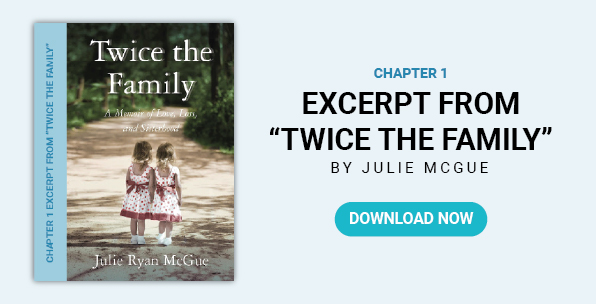
Coming Soon
A Memoir-in-progress due out Spring 2021
Memoir Moments
Each week I share excerpts from my work-in-progress, Closed: a Memoir, How I Met My Mother. The search for my birth relatives was a task I had actively avoided until I turned 48, when a breast biopsy demanded I access my closed adoption records. In the course of eight years, I availed myself of a search agency, my adoption agency, a confidential intermediary, a PI, a genealogist, and a social worker. At present, I am in active reunion with my birth mother and two half-siblings. My birth father died this past year without acknowledging or meeting me. At the outset of my search, my adoptive mother was not receptive, but she has softened over time.
8/07 "Love & Loss"
I’ve been reading about love and loss this week, spurred on by Maria Popova’s Sunday post on Brain Pickings and all the loss our nation is suffering through. In her weekly piece, Popova quotes Nick Cave and his thoughts resonated with me.
Here is what Cave says: The paradoxical effect of losing a loved one is that their sudden absence can become a feverish comment on that which remains. That which remains rises in time from the dark with a burning physicality — a luminous super-presence… things — both animate and inanimate — take on an added intensity and meaning.”
Here’s my memory of the day my youngest sister succumbed suddenly to a respiratory virus:
On that fateful November morning, I was three months into my junior year. Stuffed into a gray metal desk on the third floor of Benet Hall, I sat in the rear corner of Accounting 1 class, laboring over a mid-term exam. A knock at the classroom door startled our teacher. After whispering with the student at the door, the teacher stared in my direction, motioning me forward. I swallowed hard, flipped over my test, and then shuffled through the maze of metal desks as the curious gazes of my classmates sent a crimson flush to my cheeks.
Summoned to the Dean’s office during a fall prelim puzzled the instructor and me. In my white knee-highs and cinnamon leather loafers, I trailed the Dean’s emissary down the narrow well-worn staircase of Benet Hall and across the waxed linoleum corridors of St. Joseph’s and St. Martin’s halls. With every step I took towards the Dean’s office, the crazy worries in my head reverberated like the bass on a stereo turned up too high.
As I approached the first-floor corner office, I spied my sister’s profile through the wall of windows that preceded the Dean’s open door. Her back to the hallway, Jen sat stiffly on the ‘naughty bench’, a row of tightly placed stools where one waited in silent purgatory before being waved into one of the deans’ offices for a reprimand and/or punishment. My freshman brother, Howie, paced in front of Jen like a second-string athlete ready to enter a game.
“What’s going on? “I whispered, sliding in next to my twin. My pleated uniform skirt flapped against Jen’s thigh.
Jen’s freckled face swiveled towards me. She shrugged. “I don’t know.”
Howie leaned into our pairing, his cornflower blue eyes frog-like. Palms open and waist-high he seemed to be pleading with us to make sense of the situation: why were the three of us in the Dean’s office in the midst of mid-terms?
With our family cluster complete, the school secretary lifted her soft brown eyes from a mountain of attendance sheets. “Here are hall passes. Go to your lockers, gather your things, and go home. Be careful driving.”
The three of us stared at her like the frightened school children we were. Startled and pensive, we stalled, willing a more thorough explanation to emerge from her pursed lips. Her skittish eyes returned to the attendance sheets. In retrospect, one of us should have asked permission to use the phone on the counter to call home. Now I wonder why we had not been offered that option.
I don’t remember walking to my locker, fiddling with the combination or what textbooks and spiral notebooks I shoved into my bookbag. Nor do I recall racing to the school parking lot, or how it was that Jenny climbed in behind the wheel of the dented navy sedan that served as our family’s extra car.
When we made the right turn into our subdivision, Howie rolled his window up. A tight stillness invaded the car like the lull before a starting gun goes off. As the sedan entered the asphalt drive circling the two-story ranch that was home to our family of eight, Howie spoke. “Well, here we go,” he said. Thirty-two years later I can still hear those words.
Strange that even today, that which remains with me are my brother’s words, “Well, here we go.”
Next week look for the second half of this tale…
7/31 "Wisconsin!"
“Welcome, Julie. What a wonderful occasion to finally get to meet you.” We shake hands and I notice that Linda’s eyes are much bluer than her online photo.
“Even though we’ve never met, I’d have recognized your voice anywhere.” I look down at my clothes. “Sorry, I was at the gym when I got your message.”
My intermediary giggles. “That’s understandable. I’m glad this worked out for you to come in. Please, sit. I have everything ready for you.”
As she swivels around to the credenza, I dig for my reading glasses and concentrate on getting my breathing under control. When Linda turns back, a single sheet of paper is in her hand. “Are you ready?”
I nod.
Linda places the document on the desk. The moment progresses as if in slow motion. I’m not conscious of the Center’s phones chirping around us, nor that my heart is beating as if I’m still on the treadmill. All I’m focused on is Linda’s slender hands inching the piece of paper across the faux wood desktop towards me. She releases the paper and my right hand with the chewed-up cuticles picks it up. I read and reread the “classic old lady” name. My mind struggles with the name, rolling it around like a tongue does with too much peanut butter. When my birth mother’s address finally computes, I realize that Jenny has won the family contest. Wisconsin!
7/24 "First call"
After I stow the journal in the nightstand, I decide that I need something else to do today besides sitting by the computer or waiting by the phone. Yanking out exercise clothes, I take off for the gym. When I come out of my workout, I’ve a missed call and a voicemail from Linda, the intermediary. Why had I parked the Buick at the far end of the lot, and why do my car keys always settle at the bottom of my purse?
Linda picks up on the second ring. “I received your birth mother’s signed release. Do you want to come in, or should I mail the information?”
“I’ll be there in a half hour.”
The twenty-three-minute drive to the adoption center should be effortless at nine-thirty on a Thursday morning, but I fumble with the navigation system and the Bluetooth. Jenny’s phone is off – she’s in the air, heading to a work conference.
At his office, Steve picks up right away. “Good for you. Remember that I’ve got $5 on Iowa.”
His quip relaxes me, but only for an instant. As I speed north to the unfamiliar Chicago suburb, I regret that after all these months of working with Linda, I’ve never taken the time to visit the Midwest Adoption Center (MAC) and meet her. Finding MAC’s office building, meeting my intermediary, and receiving my birth mom’s name are all going to happen on the same day.
7/17 "Game-changer"
On the drive home, my brain hopscotches. How should I begin the first letter to my birthmother? What should I call her – Mother or Birthmother? Not Mom! What events of the last fifty years should I highlight? Should I type the note or write it out in my best cursive? Linda advised that my twin sister and me should compose separate letters, and that our first exchange include a small collection of pictures, a mixture of baby photos and recent ones.
Rushing to my desk in the kitchen, I get my sister on the first try.
“Wow. Wow. Wow. I can’t believe she had a change of heart right before the judge was to dismiss our case.” My twin hasn’t gotten her own call from Linda, because technically I’m the “searcher.”
“What’s the next step?”
“We each draft a letter, send it to Linda, along with photos. There can be no identifying information in the letters. Just generalities. It’s got to do with privacy. Then we wait for our birth mom to write back. When Linda receives something from her, she’ll let us know. We can either pick it up from her office or she’ll send them to me. That’s the drill. It all changes once our birth mom decides she’s ready for direct contact.”
My mind is churning with what-ifs and what-thens. Like, what-if my birth mom doesn’t write back? What if we have to wait months for her to reply? What if she doesn’t want to meet us after exchanging letters? And the biggest game changer for me is: what if she won’t give us the name of our birthfather?
7/10 "Heat wave"
And so, it is. In the midst of a record setting Chicago heat wave, on a Thursday afternoon in early August, as I sit in a barely cooled car in a Target parking lot with my teenage daughter and all her school supplies, my birth mother has called Linda. After nearly nine months of waiting – the irony of which isn’t lost on me – I am on the other side of “this,” the thing that is my search for identity, family and belonging. The timing is absurd.
I want to laugh, and I want to cry. “Now, after all this time? You’ve got to be kidding.”
Kassie’s blonde head snaps up. I mouth the bewildering words in her direction: birth mother called! She kicks a sandaled foot towards the door. Her gesture is a sentiment shared by family and friends: We’re over her – give her the boot! Their attitude: no one enjoys watching a cowering dog receive repeated abuse.
Linda must sense that her newest challenge is to convince me to be receptive to my birth mom’s abrupt overture. “She’s been worried about you. The judge’s order to comply with the medical questionnaire has been weighing on her.” Ah-hah! Lisa the social worker was right. This was what got her attention and forced the breakthrough.
“SOOO concerned that she waited nearly four months to check in?” A multitude of emotions grapple with one another, and testy emerges as the winner. My daughter flicks me a thumbs-up.
Linda is unfazed by my attitude, a trait that makes her good at what she does – uniting estranged and reluctant birth relatives. “She belongs to a prayer ministry. Due to the medical issues detailed in the judge’s order, she placed you and your sister on the ministry’s active prayer list. When your birth mother talked about the prayer circle and your health, her voice cracked.”
She does care about me! Us!
7/3 "Change of Heart"
As I pull into the sweltering Target parking lot, I’m chagrined that the few shady spots by the road are taken. Sliding my car into an open slot butting against the cart corral, I hope that no rushed, over-heated shoppers will ding my doors. The August heat wave has all of us on edge. I’d rather be at the pool or at home in the air conditioning than battling with families in the school supply aisle.
“Do you have a good idea what you need?” I ask Kassie. A rising high school sophomore, she holds up her school supply list and we dart into the chilly superstore.
On our return to the parking lot, my car is hotter than a pizza oven. Windows fly down and I push the A/C to the max. As Kassie and I wait for the suffocating car to cool, my cell phone belts out the melody I’ve assigned to Linda, my intermediary.
Two weeks ago, I received a copy of an order of dismissal from Linda’s office. Because six months has lapsed since my birth mother denied contact, the judge overseeing my case is mandated to dismiss it. I assume that Linda is calling today to confirm that the judge signed that order, to say her goodbyes to me as a client, and wish me good luck in life.
“Hi Linda. I’ve been expecting your call.” My voice has that controlled calm of someone seasoned at fielding disappointing news.
To my surprise, her silky voice gurgles with pleasure. “You won’t believe how I’ve spent the last hour and a half.”
My already elevated pulse spikes. “How?”
“Your birth mother called.” Linda’s voice squeaks with excitement. “She’s changed her mind.”
6/26 "Poked"
Zigzagging around the travelers at Chicago’s Union Station, I avoid the crowded escalator and bound up the nearly empty staircase. Winded at the top, I press towards the Canal Street doors where the taxis wait. In thirty minutes, I have an appointment with my new gynecologist in the medical district near Northwestern Hospital. In decent traffic, it should be a twenty-minute cab ride, which leaves me with only ten minutes to spare.
When I rattle off Dr. Stanley’s address to the driver, I don’t have to tell him to hurry because he lurches into city traffic and runs a yellow light at the corner. Unwilling to complain, I search for a seat belt. When the cabbie banks a hard left on another yellow, I brace for the jolt and reach for my purse as it slides across the seat. Whether it’s the anticipation of discussing my health with a new doctor or due to this frantic taxi ride, my mouth tastes sour. I scour my bag for a breath mint and check the folder I prepared for Dr. Stanley – a copy of the medical information from my birth mom that I received from Linda’s office about two weeks ago.
As my driver barrels over the Columbus Street bridge, I gather my purse in a bear hug, putting pressure against my belly, the abdomen that has a history of ovarian cysts and a problematic uterine fibroid, and the one which Dr. Stanley will palpate and examine, and then determine if he agrees with my previous physician’s diagnoses – a full hysterectomy. As the medical district comes into sight, I loosen my clenched jaw. In minutes, I hope to learn what one biological aunt’s uterine cancer and another’s breast cancer means for my own health outlook.
6/19 "Mothers & Mothers"
The morning sun warms the back of my neck and a nice breeze sends the sweet fragrance of the iris and peonies in my direction. As I dig in the first flat of the petunias, I’m grateful that the abundant spring rains have loosened the soil. Such a simple thing – loose soil. It makes gardening so effortless, so pleasurable. The repetitive task of making holes in the dirt settles me and my mind wanders.
To give a small plant enough of what it needs to thrive – it’s just like children. Once they’re rooted, all they require is love and attention. This gets me ruminating about mothers and Mother’s Day. There’s the irony of mothering four almost grown children while still seeking my own mothering. My relationship with my mom has improved since our conversation at my birthday dinner. Her reaction to the judge’s recent ruling about my waiting for the health forms to be returned by my birth mom was dear: “I will pray that you receive those back.”
Then there’s the conversation with my mother-in-law, ML, who called last night. “Thanks for the flowers. I just love hyacinths and narcissus.” When I laugh out loud, the dogs stare at me with sudden interest. It’s typical of my mother-in-law to call daffodils by their botanical name. She’s the most well-read person I know. Thinking of her now makes me so deeply grateful that I’m close to tears. Without ML’s maternal advice, clear wisdom, and daily checking-in, I don’t know where I’d have landed this past year. She’s not just my husband’s mother, she’s my friend. Without my family’s support, I’d be so low on the ladder of life I’d have fallen off by now. Adoption searches are tough and unwieldy.
6/12 "Kleenex"
I attended my first Post-Adoption support group meeting last month. The format of the meeting was simple. After signing in, we went around the U-shaped conference table and stated our name, disclosed whether we were an adoptee, birth or adoptive parent, and where we were in the search and reunion process. If we brought someone with us, we introduced them.
For the icebreaker piece, the social worker asked that we share our response to this question: “If you could say one thing to the family member you seek, what would that be?”
Ethnically and racially diverse, the group members ran the spectrum in age from thirty-somethings to seventy-year-olds. With the exception of two birth mothers, the rest were adult adoptees, and all but three were women. The common thread: Catholic Charities had facilitated everyone’s adoption. I was grateful that Howie and I had chosen seats at one end of the horseshoe. Since this was my first meeting, it settled my nerves to hear the group’s answers before taking my turn.
More than half of us were waiting to hear back from a birth parent or birth daughter/son. From my recent experience of waiting weeks for my birth mom to answer Linda’s outreach, I knew how excruciating passing the time can be. A woman, I guessed her to be in her late thirties, had been anticipating a response from her birth mother for over a year. When she broke down in sobs during her introduction, the Kleenex box at the center of the table shot over to her like a hockey puck.
A few older adoptees, both males, had yet to decide to send their first outreach letter. Howie fell in this category. For them, taking in the experiences of the group and deliberating over the pros and cons of search and reunion kept bringing them to the meetings. I understood their reluctance. Only twice in my fifty-one years had I seriously considered looking into my own adoption. If it hadn’t been for the breast biopsy pushing me down this path, I might not have learned of the confidential intermediary program (CISI) or Catholic Charities Post Adoption Services.
One of the birth mothers and a female adoptee shared their reunion stories. Both glowed like someone who’d recently fallen in love. They passed around photos of themselves beaming, wrapped in tight embraces with their newfound relatives. To the group’s credit, each of us ogled at how much the searchers resembled their child or parent, and each attendee professed such joy and support for the searcher that I wondered why I’d delayed in joining such a compassionate crowd. Given the recent dismissal by my birth mom, I doubted I’d be sharing photos of my twin and me flanking our birth mother any time soon. Nor could I envision Jenny and I sandwiched between both of our mothers – that thought almost made me laugh out loud.
When it was my turn to talk, I clasped my sweaty hands tightly in my lap. “I’m Julie. This is my first meeting. I’m an adoptee.” I tried to make eye contact with the people across the table. “I also happen to be a twin. Thanks to Catholic Charities’ policy of keeping twins together, my sister and I were adopted into the same family.” I smiled at Lisa, our moderator, and then I looked down at the tabletop. “Due to health concerns, I began the search for my birth mother last year.” I felt my brother’s reassuring hand on my shoulder. “Last month, I learned that she didn’t want to connect with us. I’m hoping she’ll change her mind someday.” When I glanced up, I caught the Kleenex box just in time.
The social worker jumped in. “And Julie, how would you answer the ice breaker question?”
The tissue balled up in my palm. I’d thought hard about this when the others spoke. The angry-rejected-adoptee-me, the one I’d been working hard at controlling these days, wanted to ask my birth mom: how could she look herself in the mirror every day – she who gave up not one, but two daughters, and rejected both of them. Twice. The person-that-was-me-before-this-adoption-search, the one I was desperately trying to reclaim 24/7, chose a different response to offer the group. “I would ask her if she has thought of my sister and me throughout her life, and if she ever wondered what had happened to us.”
6/5 "the plaque"
I’ve been waiting eight months to see the insides of the St. Vincent Center. This is my second visit as an adult adoptee to the orphanage. Six months ago, I stopped in without an appointment and was turned away by security. Today, when Jenny and I walk through the front entrance together, it’ll be the first time we’ve been back since our adoptive parents picked us up in March of 1959.
After I feed the parking meter, Jenny and I walk past the dozing street person. As we round the cornerstones of St. Vincent’s, the butterflies in my gut speed up their little dance. I link my arm through my sister’s and point at the grand entrance. The way the noon sun gleams off the wrought-iron fencing makes it look like it just received a fresh coat of black enamel. The notion that my first home is still being well cared for pleases me. Where the front walk breaks from the cement sidewalk, the gates fold back like the welcoming arms of the Sisters must’ve done when our orphanage was in its prime.
Jenny and I pause near the front door. “There’s the plaque I was telling you about.” She studies the sign. The St. Vincent’s Infant & Child Asylum was established in 1887 – a ninety-year history of caring for poor women and children.
I’m tempted to run my fingers over the brass rectangle, but instead I reach for a tissue. Facing the door stirs up mixed emotions. Here is where it all began. Our adoption. Our three-week stay here was because our birth mother chose not to include us in her life. We’ve returned just weeks after learning that she has made the same choice again. Twice rejected. I dab the tissue at the corners of my eyes and smile thinly at Jenny. She squeezes my arm.
5/29 "Anger"
“What is the likelihood that she will change her mind?”
Linda continues. “With birth mothers, anything can happen. I’ve seen some have a change of heart in days or weeks, and others never do. It’s hard to know the extent of their trauma or how disruptive reintroducing a child they relinquished can be to their lives now.”
Now, it’s Linda who sounds sad. It occurs to me how hard this might be on her – counseling the clients she’s been cheering on.
“So, all we do is wait? Wait for her to change her mind, and wait for her to contact you so we can ask her to fill out the health form?” This sounds like the ‘watchful waiting’ doctors prescribe patients, like me, whose health scenario is too early to treat.
“Yes, at this point this is all we’re legally able do.”
While Linda’s sympathy is soothing, my birth mom’s stunning message brings on a fierce anger. I’m a child/woman spurned, and I refuse to accept the rejection. I want more and I want what I want. I want all of it: the medical forms, to meet my birth mom, my birth father’s name, and both branches of my genealogical tree. My birth mom has a right to her privacy, but what about my right to know? Why do her rights trump mine? This feels like a cruel joke, a mistake, an error that Linda should rectify. In the two months that Linda has been working on my case, we have yet to meet in person. Now, I doubt that I’ll get that chance.
I’m back on my feet, pacing. “Linda, can you go back to the judge and ask permission to mail out the medical questionnaire? There’s a hole in your agency’s ‘first outreach’ policy. You see that, don’t you?”
There’s a pause on the line, then Linda says, “Let me talk to my supervisor. I understand your point. It may be up to the judge to rule on this.”
I think about the judge, my judge, the one I met in the courthouse two months ago. While she is not personally overseeing my case, I want to believe that she might be keeping tabs on me. I recall how she wrote my name on her tablet along with my case number. This idea of a guardian angel judge emboldens me.
“I would like to pursue this as far as we can. If I need to get my doctors to provide medical reasons for the health forms to be sent to my birth mother, I will gladly do it.” I glare out the snow-spattered windows.
5/22 "Denial"
It’s been three weeks since, Linda, the intermediary assigned to me by the Circuit Court, located an address and mailed a letter to the woman she believes to be my birth mom. The rules of engagement are strict: I’m not allowed to know my birth mother’s true identity until she grants permission. If my birth mom doesn’t respond by the end of this week, Linda will try to reach her by phone. Assuming we have the correct person and that she received the correspondence, the time she’s taken to respond troubles me. Most days, the fear that my ‘stranger mother’ will shove my twin and me back into obscurity keeps me awake for hours in the middle of the night.
Three days from now, Jenny and I will celebrate our 51st birthdays. The day is both a beacon and a deadline. Will our birth mom respond before the day on which she gave birth over five decades ago, or will she let it pass as if it’s just any other day? My moods are like a roller coaster. One minute I’m soaring with optimism, and then I plunge into negativity. I can’t wait to get off this wild ride.
Snuggled under a nubby afghan, the sunroom has become both a lookout and my refuge for the afternoon. Next to the front porch, it’s our family’s favorite spot for sipping a cup of coffee or lounging with a book. It’s not a place frequented by bad news. I find myself believing that my afternoon hours here will ward off any bad news which might arise.
When the landline rings, the effect is so jarring that both of the dozing collies leap into a barking frenzy. I shush the pair and shut the sunroom door behind them.
“Julie?”
I’m expecting an update on JT, so the voice of Linda, my intermediary, startles me.
“Is this a good time?” Linda’s voice is smooth like velvet. It tempts me into relaxing, but there’s no way.
I take a deep breath. “Sure.”
“The Center received a note from your birth mother today.”
Everything stalls: my brain, my heart, my breathing, and my hopes. When I rescue my voice from underneath a hard swallow, it has the meek tones of a child who expects a scolding.
“Yes?”
“I’m sorry, Julie. She has “denied contact” with you.”
Denied contact? My brain can’t compute this. Technically, I know that this means the search is over- my birth mom’s refusal to connect ends the process. But it can’t be! I have so many unanswered questions.
5/15 "The OBR"
The phone buzzes in my palm. When I see the number, my heart takes an extra beat.
I don’t wait for Linda’s greeting. “Hi Linda! I didn’t expect to hear from you so soon. I hope you’re calling with good news?” Please say you have her real name. Please, please, please.
Linda is all business. “As a matter of fact, I do have some news. I haven’t completed the Search Assessment yet, but I wanted to give you a quick update. The adoption agency provided the two names that your birth mother used at the time of your birth. It’s believed that one of these names is an alias, and one is believed to be her legal name. One was used in both the court file and on the original birth certificate. I checked the death index and this woman is still alive.”
“Oh. Thank God.” We’re going to be able to look for her.
Processing Linda’s message, I ask, “So is it her alias that’s on the OBR and in the court records?”
If this is true, then next year’s proposed change in Illinois’ adoption law – one which provides adoptees born after 1946 with a copy of their original birth record – won’t help me at all.
“I’m sorry, Julie, I can’t reveal which name is on what document.” I swallow hard. The CI program has so many restrictions, all due to the protection of rights and privacy.
What about my right to know?
“Do you … can you tell me how likely it is that you’ll be able to find her?”
“As you know, I can’t reveal anything about the second name, but what I can say is this: the name is not a common one. I’ve been able to locate a birthdate, a place of birth, and a marriage certificate. Based on our experience with other searches, the amount of information we’ve received is average, but we’re often successful in locating a birth relative using this kind of information. While I don’t know yet if the marriage record pertains to your birth mother, I believe it’s a possibility. The maiden name and the age of the woman whose record I located matches the information I know about your birth mother.”
Linda is excruciatingly careful with her wording. She provides information without committing to it and this frustrates me. “What about my birth dad? Did anything show up for him?”
“I’m sorry to say that I haven’t received any information on him. The original birth certificate provided only the age of your birth father at the time of your birth. Should I learn of identifying information pertaining to him, a search for him may be possible.”
“Are you saying that his name is not on my OBR or in the adoption file?”
Linda sighs. “That’s correct.”
5/08 "More Questions"
In the short ride up in the elevator, Nancy gives us a brief history of the building, and an overview of how the space is used now. “What were once areas for convalescing mothers or housing and dining for the staff have become Catholic Charities’ offices and conference rooms.” Some of Nancy’s descriptions of what went on at St. Vincent’s in the 50s, 60s and 70s are a repeat of what I read in the paperback history, but there’s no substitute for seeing the space in person.
Nancy holds the elevator door open and Jenny winks at me as we step out. She mouths the words, “This is fun.”
I smile back. I suppose this little field trip to St. Vincent’s is fun, but I’d describe it as meaningful, filling a hole I didn’t know needed filling.
I glance over Nancy’s shoulder and down the long hallway. The linoleum tiles gleam, much like they would’ve glistened under Sr. Mary Alice’s reign. I feel a pride I hadn’t expected. If you were to be an orphan in 1959, this was probably the Cadillac of orphanages. I look in the opposite direction and can almost hear the elaborately robed Sisters swishing down the halls as they checked on their charges, evaluated the storeroom inventories, and assisted the army of nurses and their aides. The Daughters of Charity had truly run an impressive operation.
My sister asks, “I read that besides being an orphanage, this was a maternity hospital, too.”
Nancy answers. “You’re correct. At one time there was a women’s ward at St. Vincent’s. Sometime in the mid-1950s, the mission changed. While some women did spend time here before they went into labor, the Sisters no longer handled births. Let’s go right, here.”
We follow Nancy, and we stop outside a conference room. Before Nancy can say another word, I ask a question that’s been jabbing at me. “You said you peeked at our adoption file. Do you happen to know if our birth mother spent time with us here?”
Nancy shifts on her feet and cocks her head at me. “She was not here with you. The records don’t indicate what happened to her after your birth or when she signed the relinquishment papers. I’m sorry.” I swallow hard. Not quite foundlings, we were nonetheless, abandoned children. We had become wards of the state hours after taking our first breaths.
5/01 "Tour"
Nancy gives me a warm hug, and I make introductions. “This is my twin sister.”
Nancy’s eyes flick between us several times. “Wow. You two really do look alike.”
My sister laughs and glances over at me. “About a month ago, we learned through DNA testing that we’re identical.” This isn’t a set-up. We hadn’t planned on bringing this up.
Tagging on to my sister’s comment, I’m conscious of keeping my voice free of accusation. “When we were adopted, Catholic Charities told my parents that we’re fraternal. Perhaps you can shed light on how this mistake might’ve happened?”
A slight frown erases Nancy’s smile. “Before coming over here to meet you, I studied your file. Your birth mother did not deliver you here at St. Vincent’s but at a maternity hospital. Whatever information was sent over from the hospital is what would’ve been captured in your file. I’m sorry for the error, but I’m happy you found out the truth.” So, there it is, an apology, leaving me with no one to blame.
Nancy’s perfectly arched eyebrows frame her blue-green eyes. She smiles again. “Since you’ve already viewed the old photographs down the hall, I’ll show you a few other areas and then we can finish in the chapel.”
4/24 "St. Vincent’s"
I ease my Buick into a parallel spot, sandwiching it behind a dented Volvo covered with decals. Ten yards ahead of me, Chicago’s LaSalle Street is a parade of buses, cars, and taxis. A stream of exhaust mixes with the chilly April air and drifts towards a homeless person propped against the St. Vincent’s Center. Fifty years ago, the same red brick building serviced a different clientele – women, infants and children. Back then it was known as the St. Vincent’s Infant Home.
Today, my sister and I have an appointment with Nancy, a Catholic Charities Post-Adoption social worker. Besides a tour of the building where we spent the first three weeks of our lives, Nancy promised to show us the third-floor chapel and its baptismal font. Last summer, we learned we’d been baptized in St. Vincent’s chapel not at Holy Name Cathedral as our parents had been led to believe.
“Are you ready to do this?” I ask my sister.
During the forty-minute drive into the city, my sister had transformed the passenger seat of my car into her own personal command center. While I navigated the Eisenhower expressway, she plugged a headset into her phone and fielded calls from clients and colleagues. Between my twin’s work schedule and the social worker’s commitments, setting aside this timeslot has been two months in the making. I began working on it shortly after our birth mother denied contact with us in mid-February. Reconnecting with a time in my life which I can’t recall has become increasingly important to me.
She stows her things. “Yes, I’m ready!”
“Look, that’s where the orphanage’s playground must’ve been.” I point at the parking lot behind St. Vincent’s, a seven-story building which takes up an entire city block.
On the back seat of my car is the paperback, St. Vincent’s: The Orphanage That Shined.I grab it and open to the page where Sisters in winged head-dresses pushed baby buggies while nurse’s aides played games with toddlers and school-aged orphans. I point to where the roof of St. Vincent’s meets the sky.
“Those stained-glass windows must be the chapel. I read that the fifth floor is where the babies were cared for.” I look down at the book in my hand. “No more babies. No more cribs. Not since 1972 when the place officially closed and DCFS took over foster care in Illinois.” I gesture at the end of the north-facing wing. “According to the book, Sr. Mary Alice’s office would’ve been over there.”
She smiles at me. She’s read the tales about Sr. Mary Alice Rowan, St. Vincent’s infamous prioress. One myth professed that Sr. Mary Alice need only open her office window and project her “vigorous voice” to gain the attention of the Monsignor one block away at Holy Name Cathedral. Since reading all the tales in the paperback and recalling my mom’s personal account of dealing with Sr. Mary Alice, the nun has become a vivid character for me.
She opens the car door. “I’m really looking forward to meeting Nancy and seeing the chapel.”
I pull out quarters for the parking meter. “I’m so glad you took the afternoon off.”
I’ve been waiting nearly nine months to see the insides of the St. Vincent Center. This is my second visit as an adult adoptee to my old orphanage. Six months ago, I stopped in without an appointment and was turned away by security. Today, when the two of us walk through the front entrance together, it’ll be the first time we’ve been back since our adoptive parents picked us up in March of 1959.
4/17 "Identical"
“I was told you were fraternal.” Mom said. “Why would the Sisters at St. Vincent’s misrepresent that?”
I hadn’t said: “Because no one cared enough to get the details right. Because the nuns weren’t there and neither were you, so all of you perpetuated a lie.” No, I hadn’t said those things, but I wanted to. Since my birth mother’s rejection earlier in the month, I’m quick to be cross with anyone connected to my closed adoption.
What I said to my mother was this: “You’re certain the nuns told you we were fraternal?” The words were in the air before I considered their effect. These days my mother is sensitive about her memory. In the background, Dad was yelling for her.
“Haven’t we always suspected you were identical because of the Twin Studies you did at Indiana?” Mom sounded impatient, which was no doubt due to my accusation and my father’s hollering.
Coiled in my desk chair, I reminded her. “The researcher’s conclusion was not definitive. The point is Jenny and I are identical twins that grew up believing we were fraternal. This is just like the baptismal certificate – you told us we were baptized at Holy Name, but we weren’t. This is more of the same.” I knew I was being difficult, that I was wearing her down with these countless assaults, but I was looking for someone to blame.
My mother sighed. “Your father needs me. We can continue this discussion another time. If “the powers that be” say you’re identical, then that is what you are.”
The manner in which my mother shifted the blame of this grievous error onto others was reasonable, and it was also predictable. I was blaming her, and she threw it off onto, as she called them, “the powers that be.” I remember well that phrase from my childhood. As a kid, I thought “the powers that be” were a corps of unnamed saints responsible for handling questionable circumstances. As an adult, I realize that my mother used this phrase to explain away uncertainty and to end difficult conversations.
In my heart, I knew I should lay off my mom. These mistakes in my adoption story were not her fault, but all the absent truths, the search dead-ends, the denial of contact, and our case extension languishing before a judge had turned me into a fuming, finger-pointing victim.
4/10 "Gene Test Part 2"
In March of our senior year in high school, I decided to attend Miami University and study psychology. Eastern Illinois University was recruiting my twin sister for volleyball. The only college where we’d both applied and been accepted was Indiana University. Towards the end of March, my parents planned a visit to IU. Leaving my three siblings at home, the four of us packed up in the family station wagon and headed to Bloomington. Four rigorous years at our college prep high school were closing out, prom and graduation were about a month away, and the looming independence of college life tantalized us. Yet, there was an apprehension lurking below the excitement. Could my twin sister and I disentangle from one another and enjoy college apart?
Sometime during high school, I decided that I wanted to study psychology in college. My mother says that even as a toddler I was an observer – I watched before joining in any group activity. People’s personality traits, their reactions and behaviors fascinate me, as do the choices they make. Certainly, my adoption made me conscious of the ‘nature v. nurture’ debate, but my chosen course of study was influenced by the faulty family dynamics that erupted following my youngest sister’s sudden death. So too, I puzzled my mother’s grief and her bouts with depression. Subliminally, I may even have been on a quest to understand how a mother could give up, not one but two, healthy newborns to a stranger to raise as her own.
On the trip down to Bloomington, my Dad mentioned something that piqued my interest. “I read that Dr. Rose in the Psych. Dept. at IU is famous for his Twin Studies Program. You should ask about it during your tour. It might be something you and your sister should get involved in if you go there.”
Dad was spot on about Dr. Rose and the Twin Studies Program. He was also right about IU being a strong college choice for both of us. Over that weekend in Bloomington, something else became obvious. Two young women who’d been inseparable since before they were born needed more time together before charting futures that would push them in different directions.
Four years later, my sister received her degree from IU’s College of Business, and I graduated from the Dept. of Psychology with Honors. While I never had the privilege of studying under the renowned IU Personality Psychologist, Professor Rose, we did enroll in the Twin Studies Program. We underwent a battery of tests – personality inventories, physicals, questionnaires, interviews and observation and received a compilation of the data.
The results astounded everyone: our profiles were so similar that the researcher suggested we “could be considered identical twins.” We wondered how this could this be. Catholic Charities had told our adoptive parents that we were fraternal twins: two eggs, two sperm, and two placentas. To be identical would mean that one egg was fertilized by one sperm and then divided leaving two fetuses to develop in one placenta. The phrase, “could be considered identical twins,” was nebulous. What were we really? Since there was no one who could answer this question with any certainty, we have referred to ourselves as fraternal twins for fifty-one years. Until now.
4/03 "Gene Test Part 1"
Sleet collects on the windowsill as I proofread my daughter’s Freshmen Lit essay. The landline interrupts my mental cursing of her punctuation and grammar.
It’s my twin sister. “Hi. What’s up?”
She says, “For our birthday, my kids purchased a genetic testing kit from 23nMe. I think you should do it, too.’
A few months back, I sent Ancestry my spit and $99. Since signing up, I regularly scrutinize the list of third or fourth cousins who are a match. The online messages I’ve sent to distant relatives aren’t always answered. If I do receive a response there’s no consistent family names linking me to these distant relatives. Without my birthparents’ true identities, I would need a sibling, a first cousin, or an aunt or uncle to register in order for the connections to be useful.
I share all this with my sister. “You think that 23nMe is going to yield better results?”
She launches into her pitch. “Number one: it’s supposed to be more scientifically sound. Number two: 23nMe has picked up a different client base than Ancestry. Plus, you can contribute to research by participating in their surveys.”
“What’s the cost?” I don’t know why I ask this. What’s one more vial of spit and one more big bill if it produces the break we desperately need?
My sister presses. “We have nothing to lose by trying another DNA site. It could be weeks before the judge rules on your request for the second letter to our birth mother, right? If that fails, waiting for our birth mom to change her mind feels like watching paint dry.”
I giggle at my sister’s sarcasm. The “denial of contact” still has me in a funk, but my sister admitted she “is over it.” I’ve confided in Steve how weary I am of researching and spearheading each new assault on our closed adoption. While I’m considered, “the searcher” in the eyes of the court, my twin sister benefits from my efforts. Her call today is a positive step towards squashing the seeds of discontent which have been sprouting inside my head.
“I’m signing up online right now,” I say. “Did you know there’s an option for twins? Let’s sign up for that analysis, too.”
After I hang up, I envision all the relatives this new test might provide. I look at the diploma above my desk. Indiana University was another one of those forks in the road where I’d planned on going left, but my relationship with my twin pulled me to the right. The combination of the gene test kit and the framed degree reminds me of the Twin Studies Program which we participated in at IU over thirty years ago.
3/27 "Table of Eight"
It’s my birthday, and as I have done every year for the last 51 years, I am out celebrating another year with my family, which includes my sister, my children, my husband and my adoptive parents.
Since I filed the paperwork to be assigned an intermediary in November, my mother has never asked a single question about that process. Mom has no clue that when I filed my petition to be assigned a confidential intermediary at the County courthouse, it was Election Day. She doesn’t know that I met Judge Aurelia Pucinski and our private conversation took the place of a hearing. She isn’t aware that my intermediary’s name is Linda, or that in early January a letter was sent to my birth mom. And, she doesn’t know that during these last three weeks, I’ve held my breath every time the phone rang because I’m waiting to hear about my birth mom’s response.
Because my mother disregards the most crucial task which I’ve ever set out to achieve, I’ve stopped sharing other aspects of my life with her. I’ve not mentioned the problems with my uterine fibroid, or that I’ve been advised to have a hysterectomy, and that I’ve deferred a decision until I receive a second opinion. I’m not just angry and disappointed. I’m stung by my mother’s lack of maternal support. Part of me believes that her apathy is a punishment for seeking out my ‘other mother.’ I’m convinced that all those times she vowed to “help in any way she could” were just words she thought she should say. What also hurts is that I would treasure another ally in this battle with my closed adoption. Thank God for my husband, my twin sister and a compassionate mother-in-law.
So when my mother asks for the first time in months, “How is the search for your birth parents going?” I turn away from her.
I set my cabernet down next to my steak knife and take a sip of water. It’s not just that my mother has chosen a public place to pose a question that is three months overdue. She picked my birthday, a day on which I’m reeling from my birth mother’s rejection, and a night I’m determined to set my adoption aside and have fun. I pulled the short straw. I should have sat next to Dad. I peek at mom’s cocktail glass. The Manhattan-on-the-rocks-with-a cherry is now mostly a cherry perched on ice.
I consider a trip to the ladies’ room, but the waiter appears. “Has everyone had a chance to study the menu, or do you need more time?” he says. Oh yes, I need more time for so many things.
The waiter takes our orders and retreats to the kitchen, I take a deep breath and turn back to my mother. “How interesting that you should ask that now. We got word through the confidential intermediary earlier this week. At this time, my birth mother does not wish to connect with us. The CI is convinced this decision will change over time.” As I say this, I avert my gaze, shifting it to the single red rose at the center of the table. I refuse to let my mother see any of my inner turmoil, pain which she might detect in my hazel eyes.
Instantly, my mother’s hand caresses my back, as if to say: I know this must be a wicked disappointment. I’m here for you. I stiffen, wondering why she’s silent and doesn’t put this into words. When I don’t say anything, my mom looks across the table at my father. Her hand still rests lightly on my back, and I resist the urge to squirm out of it. Unable to catch my father’s eye, Mom reaches for her cocktail. She sits back in her chair and looks into the glass as if studying the reflection of the cherry in the ice. So, I reach for my wine glass and sit back too, grateful that perhaps a difficult moment has passed. My mother has finally expressed an interest in my adoption search, and I succeeded in not chewing her out for taking her time in doing it.
To follow along with my story, go to https://www.juliemcgueauthor.com. Thanks for reading.
3/20 "Denial of contact"
Today, a huge snowstorm is blanketing the Midwest with nearly a foot of snow. Roads are treacherous, schools are closing early, and the raucous sound of snow shovels fill every street. I sequester myself in the family room with the phone in my lap and the dogs near my feet.
It’s been three weeks since, Linda, the intermediary assigned to me by the Circuit Court of Chicago, located an address and mailed a letter to the woman she believes to be my birth mom. The rules of engagement are strict: I’m not allowed to know my birth mother’s true identity until she grants permission. If my birth mom doesn’t respond by the end of this week, Linda will try to reach her by phone. Assuming we have the correct person and that she received the correspondence, the time she’s taken to respond troubles me. Most days, I wake before dawn worrying about this.
Three days from now, I will celebrate my 51st birthday. The day is both a beacon and a deadline. Will my birth mom respond before the day on which she gave birth over five decades ago, or will she let it pass as if it is just any other day? My moods are like a roller coaster. One minute I’m soaring with optimism, and then I plunge into negativity. I can’t wait to get off this wild ride, one which I have absolutely no control over.
When the landline rings, the effect is so jarring that both of the dozing collies leap into a barking frenzy. I shush the pair and shut the sunroom door behind them.
“Hello?”
“Julie?” Expecting a call from my daughter, the voice of my intermediary, startles me.
“Is this a good time?” Her voice is smooth like velvet. It tempts me into relaxing, but I can’t.
I take a deep breath. “Sure.”
“The Center received a note from your birth mother today.”
Everything stalls: my brain, my heart, my breathing, and my hopes. When I rescue my voice from underneath a hard swallow, it has the meek tones of a child who expects a scolding.
“Yes?”
“I’m sorry. She has “denied contact” with you.”
Denied contact? My blood runs cold. Technically I know what this means. The search is over- her refusal ends the process. But it can’t be! I have so many unanswered questions.
“But … did she at least fill out the medical questionnaire?” My anger leaks out.
My request for health history is more than just answers on a form. It’s a way to connect with my birth mom and the only way to learn my birth father’s name. It’s the means to solve the entire puzzle of my existence. My birth mother’s “denial of contact” means that everything I’ve been dreaming about, wanting and needing, is impossible. She has shut the door on me and squashed all my hopes and dreams.
“No. We didn’t include the health forms in the first outreach. The agency’s policy is to include them in the second round of correspondence. The goal of the first letter is simply to establish contact.”
I huff, “Linda, I don’t understand why it didn’t go out with the first outreach. Family health history was my goal from the beginning. Exactly what I didn’t want to happen, has happened. I’ve ended up with no contact and no health history. Will the judge allow us to go back to her?”
I look at my dog, Emmett. He paws at the sunroom door and his nose smudges the glass. I let him inside. As if he knows the tough spot where my heart has landed, he nuzzles my knee. I sniffle hard, damming up the tears his tenderness unleashes.
“No. The program dictates that once the birth relative rejects contact, we can’t go back to them. They must initiate a future connection. I’m sorry. I was hoping that I could get your birth mom on the phone. From experience, once I’m able to talk to a birth parent I’m successful in establishing an exchange of letters and photos. This did not play out as I expected.”
“Linda, this is so unfair.” Emmett licks my hand.
“Yes. Yes, it’s unfair. Again, I’m so sorry. I can read the letter to you if you’d like. Perhaps it would help to hear her words?”
“I guess so.” I shut my eyes and Linda begins with the date: February 5.
My birth mother’s response flew through the postal service in record time. Three days. She penned it three days before today’s snowstorm strangled the Midwest. Three days before JT went into surgery in Africa. It landed in Linda’s inbox on my daughter’s birthday. Three days before my own birthday. My world has tilted in three measly days.
3/13 "The Other Name"
The phone buzzes in my palm and when I see the number my heart does a little skip.
I don’t wait for my intermediary’s greeting. “Hi Linda! I didn’t expect to hear from you so soon. I hope you’re calling with good news?”
In the half-second in which Linda pauses, I pull out a kitchen chair. Please say you have her real name. Please, please, please. I close my eyes.
When Linda speaks, her voice is all business. “As a matter of fact, I do have some good news. I haven’t completed the Search Assessment, but I wanted to provide an update. The adoption agency provided the two names that your birth mother used at the time of your birth. It’s believed that one of these names is an alias, and one is believed to be her legal name. One of the names was found in both the court file and on the original birth certificate.”
“Oh. Thank God.” We’re going to be able to look for her. Then my brain processes Linda’s message.
I ask, “Her alias is on the OBR and in the court records?” If this is true, then the proposed change in Illinois’ adoption law in November 2011– which provides adoptees born after 1946 with a copy of their original birth record – won’t help me at all.
“I’m sorry. I can’t reveal which name is on what document at this time. Not until I have your birth mother’s permission to do so.” My heart sinks. The CI program has many restrictions – all due to the protection of rights and privacy. What about my right to know?
“Do you … can you tell me how likely it is that you will be able to find her?
“As you know, I can’t reveal anything about the second name. What I can say is this: the name is not a common one. Using one of the names, I’ve been able to locate a date and place of birth and a marriage certificate. Based on our experience with other searches, the amount of information we’ve received is average, but we are often successful in locating a birth relative using this kind of information. While I do not know yet if the marriage record pertains to your birth mother, I believe it’s a possibility. The maiden name and the age of the woman whose record I located matches the information I know about your birth mother.”
Linda is excruciatingly careful with her wording. She provides information without committing to it and this frustrates me. “What about my birth dad? Did anything show up for him?”
“I’m sorry to say that I have not received any information on him. The original birth certificate provided only the age of your birth father at the time of your birth. Should I learn of identifying information pertaining to him, a search for him may be possible.”
“Are you saying that his name is not on my OBR or in the adoption file?”
Linda sighs. “That’s correct.”
“That was legal?” I ask.
“Yes, in those times, a birth father’s name was often absent from the documents.”
My mind clicks over to a new set of worries. “Which means that in order to locate my birth father, we have to find my birth mom first.” There’s always one more step in adoption search and reunion. “This means that only my birth mom knows his name. She’d have to provide it in order for us to find him.”
I swallow hard. So many ‘ifs.’
3/6 "Linda"
It’s Friday and time for the Memoir Moment, when I share an excerpt from my book Twice A Daughter due out Spring 2021 with SheWritesPress:
Prepping the dining room for two dozen Thanksgiving guests is an annual challenge. I’m pulling out tablecloths and napkins from the antique sideboard when my cell phone buzzes on the table. The number on the screen is not one I recognize, but it carries a Chicago area prefix.
Two weeks ago, I received a letter from the Circuit Court of Cook County stating that I’d been appointed an intermediary who would contact me directly within a few weeks. Since then I’m never far from a phone.
My breath catches. “Hello?”
“Is this Julie?” The woman sounds younger than me.
“Yes, it is.”
“This is Linda from the Midwest Adoption Center. Judge Aurelia Pucinski appointed me as your confidential intermediary. Is now a good time to talk?” Linda’s voice is so soft and gentle that I’d like to slip into one of the dining room chairs, but instead I run to the kitchen desk for a pad of paper.
For the next twenty minutes, Linda details the timeline of what happens next in the search for my birth relatives. I will sign a contract and return it with a processing fee. This has been mailed to me along with a questionnaire. I mention my health issues and that I’m a twin. I explain that because of all the service fees, my sister and I decided that only one of us needs to be ‘the searcher.’ I learn that Linda’s office has handled other cases involving twins, but we’ll be her first.
Linda continues. “It’s important that I have all the information you already know. Complete the questionnaire
as best as you can and forward any documents you have related to your adoption or to any previous search efforts.”
I give Linda a summary of the last six months: the failed first search with an agency out of Texas, my registration with the Illinois Adoption Registry and Medical Information Exchange (IARMIE), and a summary of the non-identifying information from both my birth certificate and adoption file.
“Send me copies of all that. Once I receive the contract and questionnaire, I’ll start requesting files and documents from government and private agencies. From these I’ll complete your Search Assessment. The Search Assessment will show the relatives about whom I received information and the probability that I can locate them. This usually takes 10-12 weeks, but it could take longer if files or documents are difficult to obtain. Once you receive the Search Assessment, you’ll have the choice of selecting the relative you want to find. If you want to search for more than one, there’s another fee.”
I stop scribbling on the notepad. “Linda, we know from Catholic Charities that our birth mother used an alias.”
Linda doesn’t hesitate to react to this. “That was a common practice in the era in which you were adopted. Often, the adoption file will disclose the birth parent’s real names. I’ll give you an idea how likely it is I can locate either of them in the Search Assessment. Some people are located in a few weeks while other searches continue for many months. I promise to provide you with updates as often as possible. Any other questions?”
The worry I have about whether my birth parents’ real names are in my adoption file ties up my tongue.
Perhaps Linda senses this for she says, “I understand that waiting for news of progress will be difficult. I urge you to talk with a trusted friend or relative about your feelings. In addition, you’ll have the opportunity to talk with me about issues that may come up for you during the process.”
“Great. I’d like that.” Judging by today’s conversation, I bet Linda is a good listener.
My intermediary’s last words tickle an idea I’ve been mulling over. The social worker at Catholic Charities mentioned a quarterly Post-Adoption support group, which is made up of birth mothers, adoptees and adoptive parents. People who are going through the same process of search and reunion as me.
As always you can follow along with my story at https://www.juliemcgueauthor.com.
2/28 "The Judge"
It’s Friday and here’s the next excerpt from my memoir, Twice A Daughter, about the search for my birth family due out in May 2021 with SheWritesPress:
Even though Shanika from the Midwest Adoption Center assured me that mailing in the completed paperwork was sufficient, the possibility of a hearing influenced my decision. So did my birth mother’s advancing age and my experience with turnaround time from government agencies. I did not want any more roadblocks or delays. By filing the intermediary paperwork at the courthouse in person, I ensure two things: that my request for an intermediary is processed in the shortest amount of time, and if they require a hearing, I will be present.
Emerging into the throng of passengers at Union Station, I contemplate an appearance before a judge. In college, I was a witness to a traffic accident. The pressure of speaking before an open courtroom drained me. Besides the sweat leaking from every pore, my muscles ached from sitting like a mannequin in the witness box during interrogation. If there is a hearing today, my aim is to be prepared. As I walk the fifteen minutes from the train station to the courthouse, I rehearse my comments. At the forefront of my argument are two issues: I have a personal right to any information that concerns me; and my precarious health demands it.
At the Daley Center, I sail through security. Election Day is a blessing. The usual crowds have either taken the day off or are lining up at voting booths. Picking up my briefcase and purse on the other side of the metal detectors, I think about my birth mother and adoptive parents. If either party appeared for my adoption hearing in Family Court in 1959, they were probably not wanded, scanned, and patted down. A security guard points to the building directory and elevator bank. In the back of the crowded elevator, I release my trapped breath as quietly as I can.
The elevator deposits me outside a large office suite where records and petitions are processed. At the far end of the room, three government workers cluster behind a long counter. Stanchions direct petitioners into an orderly lane that snakes around the anteroom. A young couple and I wait for the workers to finish up their pre-lunch conversation before they motion us forward.
The young clerk who waves me over has never handled a CI petition in person before. Most people mail them in, she says. She dates and time stamps my paperwork and writes a case number underneath. I scribble it on my copy, just in case. I ask about a hearing. She looks at me with a blank expression, ambles over to her co-worker, and then directs me up to the Family Court floor. In the elevator, I have that sensation one does before something important is about to happen: expectancy boosts the stomach juices and uncertainty riles the bowels.
The Family Court floor has a different set-up than the one where I filed my petition. Over one shoulder are the judicial offices and over the other is a maze of courtrooms, conference rooms and waiting rooms. Confused, I enter the judicial section and stop at the receptionist’s desk.
“Hi. I just filed my petition downstairs for a confidential intermediary. When I asked about a hearing for my case, the clerk directed me up here. Do you know where I should be?”
“I’m not sure either. Hold on let me ask Judge Norton.” Lifting the receiver, she punches an extension button on her phone. When she hangs up, she smiles. “We are not very busy today on account of election day. The Judge will be right with you.”
I can’t believe how easily this process is going..
If you’d like to read more memoir moments or follow along go to https://www.juliemcgueauthor.com. Thanks for reading.
2/21 "Midwest Adoption"
It’s Friday and time for the Memoir Moment, an excerpt from my book due out in May 2021, about the search for my birth relatives. This piece follows last week’s blurb. If you didn’t read it and want to follow along go to https://www.juliemcgueauthor.com.
On the chilly, overcast Monday morning that followed coffee with the private investigator, I phoned the Midwest Adoption Center. The intake coordinator, Shanika, went over details I’d scanned on their website:
“Any adult adopted person, adoptive parent of a minor and birth parent touched by an adoption that was legally completed in Illinois can request the court appoint a Confidential Intermediary to conduct a search for a biological relative… When appointed by the court, the CI will attempt to locate the sought-after individual, explain who is making the outreach and what options are available, and facilitate exchange of information. The confidentiality of all parties is protected, and no identifying information is released without written consent.”
Shanika’s voice was full of practiced patience as she explained the process to me. “I will put the forms in the mail to you today. Once they’re complete, mail them to one of the county circuit courts mentioned on the information sheet. You will receive a callback from our office once a judge has assigned you an intermediary.”
“Will I need to attend a hearing?” I asked.
“Sometimes the judge will have questions for a petitioner. While that is a possibility, it doesn’t happen often. May I put you on hold for a minute?” Shanika said.
When Shanika returned to the line, I asked a critical question. One that would determine to whom I would write our next adoption search check. “Is there a waiting list?”
Shanika replied. “We have a short backlog. An intermediary should be available to work on your case around the first of the year.”
With one obstacle cleared, I tackle the second one. “Is the alias my birth mother used on my original birth record a serious problem?”
Shanika said. “Your CI will requisition your adoption agency for the records. With any luck, your birth mother’s real name is captured in their files.” I did the math. If I signed up for the confidential intermediary program, in two months I’d know if our search had a chance. If I hung in with Catholic Charities Post Adoption Services, it might be spring till I learned the same thing.
2/14 "CI"
Here’s the Friday Memoir Moment, an excerpt from my memoir, Twice A Daughter, a book about my search for birth relatives due out Spring 2021:
Hot tea scalds my hands and I curse myself for not grabbing a cardboard sleeve. I nestle the steaming cup carefully between my black pumps and tug up the knee-highs that have inched down my calves. I sympathize with my twin sister for dealing with these corporate dress issues on top of lugging a purse and briefcase around. My reflection in the train’s huge glass window confirms that I resemble my twin, the corporate sales manager, today. As the train leaves Hinsdale’s depot, I wish more than once that my sister was sitting in the seat opposite me.
The Metra train slows to a stop at La Grange Road. I look out the window, north of the railroad tracks. My eyes travel past the coffee shop where we met Ray, the PI who gave us the tip about the intermediary program. Through the trees that have lost all their leaves, I spy the red brick building where my parents live. I think about the call with my dad, the upcoming anniversary of my sister’s death, and the round of tests my doctor recently ordered: another quarterly mammogram and a uterine biopsy. I wish that those things did not cloud today’s task. Today is about putting life back into the lagging search for our birth mom so I can have some family medical background. Reaching into my briefcase, I pull out the intermediary paperwork to check over once more.
On the chilly, overcast Monday morning that followed our coffee with Ray, I phoned the Midwest Adoption Center. The intake coordinator, Shanika, restated facts from their website: “Any adult adopted person, adoptive parent of a minor and birth parent touched by an adoption that was legally completed in Illinois can request the court appoint a Confidential Intermediary to conduct a search for a biological relative… When appointed by the court, the CI will attempt to locate the sought-after individual, explain who is making the outreach and what options are available, and facilitate exchange of information. The confidentiality of all parties is protected, and no identifying information is released without written consent.”
Shanika’s voice was full of practiced patience as she explained the process to me. “I will put the forms in the mail to you today. Once you complete the forms, simply mail them to one of the county circuits courts mentioned on the information sheet. You will receive a call back from our office once a judge has assigned you an intermediary.”
“Is there a hearing in front of the judge?” I asked.
“On occasion, the judge will have questions for a petitioner. While that is a possibility, it doesn’t happen very often. May I put you on hold for a minute?” Shanika said.
When Shanika returned to the line, I asked a critical question. One that would determine to whom Jenny and I would write our next adoption search check. “Is there a waiting list?”
Shanika replied. “At present there is a short backlog. An intermediary should be able to start working on your case around the first of the year.”
With one obstacle cleared, I tackle the second one. “I’m concerned about the alias my birth mother used on my original birth record.”
Shanika said. “I understand. Your CI will requisition your adoption agency for the records. With any luck, your birth mother’s real name will be included in the original intake interview.” I did the math. If I went with CISI, in two months we’d know if our search had a chance. I liked those odds.
2/7 "The PI"
It’s Friday so here’s this week’s Memoir Moment, an excerpt from a chapter of my memoir, Twice A Daughter, the book about the search for my birth relatives:
My twin sister and I meet Ray on a chilly Sunday afternoon at Caribou Coffee in La Grange. My folks’ senior living complex is visible one block to the north. In actuality, the brilliant fall foliage surrounding the senior living center blocks all views of the coffee shop, but it feels as if our parents are watching us as we plot the next attack on our closed adoption. As we enter the bustling coffee spot, I half expect my mother to burst in behind us, the disdain for our task evident in the way she refuses to meet our surprised looks.
Perhaps the negative karma I imagine did follow us in from the parking lot for when we lay out our search history, Ray’s brown eyes close. He cannot help us. Our birth mother’s alias is the problem. We need her real name to proceed. Before bundling up in coats and setting aside our coffee mugs, Ray offers us fresh advice.
Given the long wait at the other search agency we are considering, Ray recommends we look into the Confidential Intermediary Service of Illinois (CISI). The program is in its infancy, and it comes with fees and time limits. The first step is to contact the Midwest Adoption Center in Des Plaines for the paperwork to be assigned a confidential intermediary (CI) by the Circuit Court. Ray explains that a supervising judge will authorize the intermediary’s access to our closed adoption files. The intermediary will update the court over the course of a year. Ray believes the CISI backlog is short.
My sister studies the lukewarm green tea in her mug. Her half-lidded eyes and pursed lips mean she is thinking. When her eyes open wide and catch mine, her look says: Why wait for the other agency to get to our case. We’re ready now. Let’s get started with CISI. I nod back at her. The check to the intermediary service will bring the cost of our adoption search over the $1000 mark.
You can continue to follow my story at https://www.juliemcgueauthor.com. Thanks for reading.
1/25 "Non-Identifying Info"
“Where do we stand with Worldwide Tracers?” Jenny asks.
I imagine my sister sitting like me with her feet up on a kitchen chair, her lanky legs crossed at the ankles, a glass of wine swirling in her right hand as the dishwasher hums over the dinner dishes. Where I slouch at a rustic pine table, a lemony furniture polish interferes with the earthiness of my cabernet. Alone in the back of the house, the faint sound of Steve winding the grandfather clock makes its way into the kitchen.
“I called them right after I read the Catholic Charities letter,” I say. “I talked to Kurt’s assistant. He wasn’t in the office today. She said she’d relay the new information.” Ever since speaking to the aide, the worry box in my brain rattles.
“Did she say why there aren’t any new developments in our case?” Jenny has raised her voice. To my ears, the tone is accusatory.
Reason tells me Jenny’s frustration is with our ineffective search agency and not me, but because I selected and hired WWT, I’m on defense. The four hundred dollars we forked over is steep considering what WWT has delivered so far. How they plan to leap-frog over my mother’s false identity is a question I did not ask.
“Kurt’s aide suggested that the trouble they’ve had in locating our birth mom is probably because she used an alias. This is now confirmed by the Catholic Charities’ report.” Two towns over, Jenny sips her chardonnay while I lift my glass of cabernet.
To steer us away from WWT’s failures, I flip through the three typewritten pages from our adoption agency. This report, for which we paid a $150 fee, reveals all the non-identifying information from our closed adoption file.
I push a floppy bang free of my reading glasses. “Jen, what surprises you most? The three-year difference in their ages, that they were not teenagers like we thought, or that our birth mom was Catholic and dated a Protestant?”
“I guess the last one. This letter makes it seem that religion was the reason they didn’t marry. I guess back in those days it was a big deal to date a man that wasn’t Catholic. If he didn’t convert, they couldn’t marry in a Catholic church.” Jen sighs into the phone.
1/17 "Tour"
Frantic yelps at the backdoor pierce my interest in the envelope. Taking the two collies a fresh bowl of water becomes an urgent task. As I rest on the painted wooden steps watching them lap up badly needed water, my thoughts skip away from the cream envelope from Catholic Charities. Instead, I think about my recent attempt to tour St. Vincent’s.
Once I received the paperback, St. Vincent’s: The Orphanage That Shined, a history of the children’s home where I spent the first three weeks of life, I devoured it cover to cover and crafted a plan. Witnessing firsthand the stately red brick building commanding the corners of LaSalle and Superior became a need. I wanted my own color photos. The grainy black and white pictures and meager descriptions from the little history book didn’t suffice. Following another downtown appointment, I skirted around the needy and homeless loitering outside the center’s black wrought-iron gates.
Stepping into the vestibule, I offered the security guard a shy smile. “I am an alum of St. Vincent’s. From the 1950s. Is it possible to get a tour?”
He shook his head and looked away from my pleading eyes towards the visitor log. “You need someone from Catholic Charities to set that up.”
“But…” I started to say. On the last page of the paperback was an invitation, a permission slip to tour the orphanage-turned-relief services center at any time.
The guard interrupted me, gesturing past my shoulder. “The best I can offer you today is a chance to look at the photos there down the hallway.”
I turned, grateful for a moment to squelch the tears that lately seemed ready and eager to paint my angular cheeks. For fifteen minutes, I absorbed the dozen framed photographs in the short corridor. I studied nuns in full habits and young uniformed nurses cuddling infants or tending to small children. None of the pictures depicted bug-eyed fraternal twin girls with wispy swirls of light brown hair.
Drowning in heavy traffic, I exited the city, deflated. A theme was clear. Whenever I challenged my closed adoption, it dealt me deferral, dismissal, or outright rejection. My adoption search path had become a maze where every turn led to a dead-end and the process was wearing me down.
1/10 "Cream Envelope"
As if it is a scalding slice of pizza, I pick up the cream envelope and gingerly pass it from one palm to the other. Cradling it, I amble over to the desk and reach for the letter-opener I’m growing fond of. The cold sliver of metal brings on the shivers again. The emotions entering the front door of my heart send a thrumming to my belly. My heart’s back door seals in a mounting internal chaos. All at once, I am flooded with excitement, anxiety, relief, and dread.
A month ago, when Vital Records forwarded my original birth record (OBR), the details it revealed set off an onslaught of fantasies which pepper me now throughout the day and take center stage when I cuddle next to my snoring husband at night. In that hazy lull before sleep consumes, I envision my pregnant mother laboring alone in a maternity hospital, forbidden or unwilling to see my twin sister and me in the nursery. Chasing that reverie is another scene where I have travelled alone to an unfamiliar place and find myself on a stoop ringing a doorbell. A woman cracks open the door. Below her chin, a security chain dangles. Bespectacled eyes squint at me with distrust and lack of recognition. My lips mouth syllables and the door slams.
When I was a young girl, I lay in bed at night much as I do now, considering my adoption. Back then my wondering centered on why I’d been placed for adoption, what my biological parents looked like, and whether I resembled them. I puzzled whether my first set of parents thought about me, considered coming back for me, and what I would do if they did. Between middle school and college, Jenny and I agreed on a story about our birth parents. Counting back nine months from our February birthday, we suspected our conception was from a union between two high schoolers at senior prom. Because of our athleticism, we convinced one another that our birth dad was a star athlete on the football or basketball team and that our birth mom had been the head cheerleader. The envelope staring at me on the kitchen island will either support five decades of speculation or it will rock my world.
12/27 "Holy Name"
It’s Friday and time for the sequel to last week’s Memoir Moment, an excerpt from the book, Twice A Daughter, which is about the search for my birth relatives. It is due out in spring 2021.
I trudge off to the kitchen, pull open the file drawer, and splay the contents of a folder marked Important Documents across my desk. No baptismal certificate here either. I should have this. Why don’t I have this? This knowledge bothers me, festers like a splinter, and then an idea forms, coalesces, becomes an urge, a question to ask. Now.
After the first ring, I question my resolve and the thought process that sent me punching in digits on the portable phone. Trucking back into the library, I plead with the baby book for encouragement, rattle the Important Papers file I find lacking.
A weary older female voice answers on the second ring. “Holy Name Cathedral. How can I help you today?”
“I would like to get a copy of my baptismal certificate please.” I swallow hard, banishing the squeak that crept in on every word of my ask.
“I will transfer you to Mary. She handles the baptismal records. One moment, please.”
“Thank you.”
When Mary picks up, I provide my name and the baptismal month from my baby book. “Can you hold while I check the records?” she says.
“Of course,” I say.
While I examine the other documents in the Important Paper envelope, I imagine Mary flipping through dusty tomes in the rectory basement to get to February 1959, her bifocals scrolling down the names that begin with ‘R’. The longer I hold, I can almost see the line where my name pops up, handwritten in an elegant cursive beside our baptismal date, birthday and adoptive parents’ names. I want Mary to find, trailing in parentheses, my birth name followed by my birth parents’ identities. I will all this so fiercely that I almost miss the line clicking.
“I have located the records,” Mary says. “I will mail you off a copy in the morning mail.” Her brisk efficiency hints at other pending tasks, perhaps other calls blinking on hold.
There’s more I need to ask. “I was adopted. Are my birth parents’ names written there?”
Mary says, “Well… we’d never have received that information. This office only certifies baptisms.”
Perhaps Mary receives this reaction often from others who call in with the same mental errand as mine. Without hesitation, she continues. “When an infant was adopted from St. Vincent’s, they sent the paperwork over to us. At this office we would have entered the baptismal date, then the adoptive parent’s names went alongside the infant’s new given name. That’s all that is listed here. No birth names. No birth parents’ names. You were not baptized here at Holy Name, but at St. Vincent’s”
“I’m sorry. What did you say?” I squeeze my eyes shut, as if this will help the pain building near my hairline.
Mary continues. “A St. Vincent’s baby was baptized in the chapel on the seventh floor at the orphanage. Nurses acted as stand-in godparents. During that era, it was believed that infants should be christened as soon as possible. Holy Name is the seat of the Archdiocese, so your baptism was certified here.”
After hanging up with Mary, the administrator at Holy Name, I stare but do not see the papers and memories scattered about on the floor of the library. Stand-in godparents? Seventh-floor chapel at St. Vincent’s? It’s no wonder there are no pictures in the baby book of my godparents and me poised over a baptismal bowl. Why was I given a new set of godparents at all?
I dial my mother.
For more excerpts go to: https://www.juliemcgueauthor.com
12/20 "Family Album"
Friday means Memoir Moments. Here is an excerpt from my memoir, Twice A Daughter, the story of my search for birth family due out in Spring 2021 by SheWritesPress.
Wiping dust free from the jacket covering the top album, I separate it from the one underneath and set it aside. I know already that every page in the thick album is a collage of photos featuring me as I morphed from a bug-eyed infant into a gangly, knobby-kneed teen.
I lift the smaller white, cloth-covered album into my lap and untie the two-sets of white satin ribbons that hold the book closed. The white spine groans and threatens to split as I open to the first creamy page of the baby book my adoptive mother made for me.
Pasted on the second page is a hand-made christening announcement. Written in silver ink by my mother’s careful hand on heavy white card stock, it declares that on Februa ry 27, 1959 my sister and me entered the Catholic faith through Baptism. I don’t recall my christening coinciding with my adoptive mother’s birthday. This detail along with the family legend of my birthdate, the Feast of Our Lady of Lourdes, overlapping with my parents’ plea for children during their pilgrimage to Lourdes, has me twisting the hairs of my already very messy ponytail.
Centered below our names, my mother’s neat cursive lists the church where we received our first sacrament: Holy Name Cathedral. Underneath, almost like a postscript, our godparents are shown: my Aunt Addie and my father’s friend, Tom H., a man I don’t recall meeting.
Nothing on the baptismal announcement is news to me. Holy Name is the seat of the Archdiocese of Chicago, and only parishioners may receive sacraments there. A short block and a half to the south and west of the Cathedral, the shiny, black wrought-iron gates of St. Vincent’s Orphanage still open at 721 North La Salle Street. Within the boundaries of Holy Name’s parish, it explains why our baptism occurred there even though my adoptive parents lived in the western suburbs.
Unfolding from my cross-legged pose, I wonder what the order of things were. Did my parents retrieve us from St. Vincent’s then meet our godparents at Holy Name for our first sacrament? Or, had the Sisters at St. Vincent’s set up the christening for my adoptive parents and godparents with my mother’s birthday in mind? But where is the baptismal certificate and why aren’t there pictures from that special day?
Next week I share what happened next. Go to https://www.juliemcgueauthor.com if you’d like to read other excerpts.
12/13 "Answers"
“Hello. Nice day isn’t?”
Twisting away from the dog’s antics, I gaze up into the pleasant grin of the young mail carrier. In his outstretched hand is the day’s mail wound in two directions with cream rubber bands. The wad is thick and unruly in my soiled hands. The impatient beast in me wants to rip off the bands and rifle through the pile.
I return the young man’s friendly smile. “Thank you. It is a beautiful day to be outside. Is the regular guy sick?”
“No. Just taking some vacation days. I’ll be doing his route all week. Have a good one.” He waves and saunters back to the unwieldy-looking pushcart.
“Enjoy your day,” I say. I never hear him resume the off-key whistling, nor the slam of the mail truck’s door, nor the hard acceleration towards the next block.
Nestled between the Val-Pak coupons and the AT&T bill is an envelope from Public Health. The white envelope is thin like the plumber’s invoice for rodding out the kitchen sink. It is as light as two sheets of college-ruled notebook paper, and it smells faintly of glue. My name, Julie R. McGue, appears in boldface Times-Roman font across the face of the envelope. The top right corner is dog-eared, and a small tear like a fissure in a china cup has formed in the paper. I smooth out the tiny fold with a clean fingertip and press the letter to my breastbone.
My scream to the dogs to come, startles them. The male collie drops the stick into the greenery and both collies’ tails fold and find their bellies. They slink over to where I pace at the front stoop. We flee past the prickly yews, over the flagstone steppers and through the unlocked side door.
Inside, the dogs scamper nose to tail, yelping and chasing after me to the kitchen, their nails clicking like typewriter keys on the wood plank floors. I bribe their silence with a treat then dial my sister. I can’t fathom opening the thin white envelope without first learning whether Jen received hers. Connecting with my twin sister as this big moment unfurls is reflexive. I want for us to cheer or moan together.
“Call me. The letter came. Did you get yours? It’s 2:50.” My words rush into an abyss. As much as I talk to her voicemail, I decide that my sister’s voicemail is our triplet.
Dropping the unopened letter near the phone, I wash my filthy hands, and then I rummage through the desk drawer for a letter opener. I can’t recall ever using one, ever needing to preserve a piece of correspondence before, but it seems like the right idea. Through the neat slit of the envelope, I tug free a single typewritten page and settle at the edge of my desk chair.
12/6 "Mail"
The mailman is early today.
Six weeks ago, Kurt at Worldwide Tracers (WWT) sent the preliminary packet of adoption search paperwork to Jen and me. From Texas, Kurt directed the filing of several forms with Illinois state agencies. The goal is to gain access to the non-identifying information on our original birth records (OBR). While Kurt has never said, and I don’t have the guts to ask, without additional information my adoption search may falter soon after we launch it.
First, Jen and I completed the IARMIE (Illinois Adoption Registry and Medical Information Exchange), administered by the Illinois Department of Vital Records. Being listed on the IARMIE sets us up with the state so we can exchange information with members of our birth family, assuming they register, too. I fear my entry on the IARMIE will go the way of the other registries and forums I subscribed to. Hours at the computer entering data: my birth name, date of birth, adoption agency, place of birth, and that I’m a twin, and not a single match. If my birth mother or biological relatives have ever shown a curiosity about Jenny and me, I have yet to unearth the evidence.
Once officially entered in the IARMIE database, the Department of Vital Records locates our original birth record (OBR). Vital Records sealed this document when the courts finalized our adoption in the fall of 1959, six months after Mom and Dad scooped us up from St. Vincent’s orphanage in Chicago. I imagine the employee at Vital Records, her name badge flapping around by the cord circling her neck, stripping down my OBR, sifting it like one does with flour when baking a cake. I envision the results of her stripping off the crucial pieces of information for WWT’s task and summarizing it into form letters addressed to Jenny and me. I find I am most curious about how old my mother was at the time of my birth and how much I weighed. Funny how important something becomes when you’re told you can’t have it.
11/22 "WWT"
It’s Friday and here’s this week’s memoir moment, an excerpt from my book, Twice A Daughter, due out Spring 2021 by SheWritesPress:
The 800 number is answered on the third ring. “Good afternoon, Worldwide Tracers & Adoption Search bureau. How can I help you today?”
The receptionist’s slow Texas twang lulls me. I sink into the black vinyl desk chair, yet her dialect highlights the absurdity of my call— I’m entrusting a personal crusade to strangers at the opposite end of the country.
“I’d like to begin a search for my birth family. I was adopted through Catholic Charities in Chicago. In February 1959. “
The receptionist has no clue that the bravado pushed into my phone voice exhausts me, nor that the spirals scratched into my yellow legal tablet are deep and wild and trail off the page.
“I have my birth name and the name of the hospital where I was born.” I whisper these words, fearing that the few details I possess may not be enough.
“Perfect. We’ll need that information. Can you hold please?” she drawls.
“Sure.” A light jazz fills the void between Chicago and Texas.
As I wait for my search angel to return, my fingers discard the crazed doodle and pop around the PC keyboard. The Worldwide Tracers company website winks the stats I’ve already memorized: a convincing 90% reunion success rate. The 10% sliver of failure is not where I expect my case to settle. The computer cursor glows over Worldwide Tracer’s claim of being featured on Oprah, not once but several times. This statistic impressed my sister. The $440 fee is sobering but splitting the cost with my sister will make it palatable. All I need is my medical history and a few facts about my birth circumstances. The thrill of a reunion with either of my birthparent’s flares, but I let that thought flame out. One thing at a time.
I pick up my redacted birth record again. How many adopted twins could have been born on Feb. 11, 1959 at Lewis Memorial Maternity Hospital in Chicago? Yesterday, Google Earth and I tracked down the location. The site where my twin sister and me were born to Ann Jensen is now a baseball diamond. We laughed about this since both of our boys play varsity ball.
The receptionist’s drawl resumes. “I will connect you to Kurt, he handles all the new adoption searches. One more minute hon’.”
“This is Kurt. I’m so glad you called us today.”
A gentle tenor, devoid of dialect, takes the reins for the first stage of the wild ride that becomes my adoption search. Half an hour later, hundreds of dollars lighter and private information divulged, we are signed up with Worldwide Tracers. Once we execute the required paperwork, Kurt will dig up details on Ann Jensen, our very-commonly-named birth mother.
Phone cradled, I cannot get my feet to move, nor my thighs to lift from the vinyl seat cushion.
Our search for personal history has begun.
To follow more of my adoption search tale, go to https://juliemcgueauthor.com.
11/15 "Peeps"
An excerpt from my memoir, Twice A Daughter, due out in May 2021 by SheWritesPress is the subject of this week’s Memoir Moment.
At 8:34 I’m back in the kitchen at the desk near the pantry. After braving the branches of my OB’s phone tree, I’m transferred first to Dr. Frank’s nurse and then asked to hold. I argue internally: Sure, why not, I’ve waited this long?
Classical music spits into the earpiece, and I think about my four children two of which I’m still raising, my precarious health and the formidable task of digging into a closed adoption finalized over four decades ago. I can’t help it. Two crocodile tears splatter onto the multi-colored family calendar that serves a dual purpose as a desk blotter.
“This is Ellen. How can I help you today?” I speak slowly as I explain my predicament.
“Oh my! You shouldn’t have had to call. I’m so sorry you spent the weekend worrying about this. Let me go to the doctor’s desk and pull your file. He won’t be in until tomorrow. You want to hold again or shall I call you right back?”
“I’ll hold,” I say quickly. Waiting for a return call is unfathomable.
My husband saunters into the kitchen, refills his coffee. I cover the mouthpiece. “I’m on hold. The nurse is checking for the results.” The two of us stand three feet apart, unmoored. Two souls sinking in a sea of concern.
By the time nurse Ellen clicks back on the line, it feels like it could be lunchtime, but it’s only been minutes. “It’s here. Again, I apologize that you had to wait for the results. Someone should’ve called you before the weekend, but we were closed on Good Friday.” My eyelids squeeze shut. Please God …
“It says here… ductile calcifications. Patient to follow up with a repeat mammogram in 3 to 4 months.” Nurse Ellen’s voice drops off. I’m afraid to open my eyes.
“So… no cancer?” I whisper. I can’t look at my husband till I know this is what the report means.
“No. No cancer. Calcifications and dense breast tissue,” she says. Clogged, perky boobs, no lumpectomy, no chemo, and no natural-hair wig.
Scrunching the handset into the crook of my right shoulder, I give my husband the thumbs up. Steve’s closely shaved chin bumps his breastbone.
“Thanks, so much Ellen,” I say. The words I offer are soft, but in my head those words sing and soar. Fingering my hair, I consider whether to cut it. I may not need a natural-hair wig, but somewhere in Chicago there’s a woman, a mother like me, that does.
“You’ll get follow up instructions in the mail. Have a blessed week.. Go have some Easter chocolate and celebrate,” Ellen says.
I giggle at the notion of pilfering a sugary Peep from one of the kids’ Easter baskets. I just might.
You can follow my story at https://www.juliemcgueauthor.com
11/8 "Can’t"
This week’s Memoir Moment, an excerpt from a chapter of my memoir, Twice A Daughter, due out in May 2021 by SheWritesPress. You can follow along with my story at https://www.juliemcgueauthor.com.
“Thanks Mom.” My son leans over, gifts me with a one-armed squeeze which is as much of a hug as a mother of a teenage son could hope for.
“See you after five,” I say. The large hand on the clock has barely budged.
I pick up his plate. Through the window over the sink, I see Dan huddled at the door of his truck. He whips off the stained baseball practice shirt and grabs a ‘cleaner one’ from the floor of his Ford pickup.
Where did I get him?
Out of nowhere the question appears like a call from an old friend. The abrupt query revs up my adrenal gland and suddenly I’m pacing from the kitchen window to the breakfast table, my mind in a loop.
Where did I get him?
Furthermore, whom do my girls take after? Two six-footers, two brunettes and one very strawberry blonde make up my motley crew. From which side of my genetics does that diversity emanate? Who passed on their competitive, determined natures? Who can I blame for my annoying, chronic sinus infections? Who handed down the freckly fair skin and high cheekbones that I share with my twin and two offspring? Am I really of Irish and German descent as was relayed to my adoptive parents? What about my son’s ability to grow a full, dark beard that a prophet or rabbi would envy? Or my nephew’s distinctive bull-legs? What about…? What about…? What else should I know, but don’t?
Can’t, because of my closed adoption?
11/1 "The File"
It’s Friday and time to share a memoir moment from a chapter in my book, Twice A Daughter, due to be published in Spring 2021 by SheWritePress. You can check out other excerpts at https://www.juliemcgueauthor.com:
My dad clears his throat. I missed the dress rehearsal for this moment. He reaches for the manila folder I hadn’t spied under his tumbler of Dewar’s. Mom stiffens into the upholstered seat back of the loveseat, fingers tightening on the throat of her wine goblet. I cross my legs and stuff sweaty palms under each thigh. I know I must look like the child I have become inside: shy, fearful of wrongdoing, and always eager to please.
“Julie, this is the file I have on your adoption. Your mother and I will help both of you in any way we can.” Dad’s clear blue eyes meet mine. Behind his oversized horn-rim glasses, I see tears merge with the dark frames.
“Ah, Dad,” I say. I know what’s coming.
“Adopting your sister and you was the best thing that ever happened to your mother and I.”
Since his stroke, emotion comes easily and often. So does repetition. He clutches the meager file and continues.
“While we were stationed in Germany, your mother and I took a side trip to Lourdes, France. Right, Sue?” His bad hand shakes while the good one dabs a tissue under the huge eyeglasses.
Mom nods and sips her wine. “Go on, dear.”
10/25 "Doubts"
It’s Friday and Memoir Moment sharing time. This is an excerpt from my memoir, Twice A Daughter, due out in Spring 2021 by SheWritesPress. If you wish to follow my writing further go to https://www.juliemcgueauthor.com:
Shifting from one scuffed loafer to the other, I consider what awaits me behind the wide door with its centered peephole and shiny brass knocker. Dad might be reading another whodunit or blasting the White Sox spring opener, his ill-fitting hearing aids lying forlorn somewhere other than in his ears.
Most likely, Mom thumbs through mail-order catalogs stacked on the den’s coffee table. Then again, her soulful chocolate brown eyes might be shut in prayer, her enlarged knuckles working a string of rosary beads. Maybe now they study their wristwatches and wonder if the evening stream of commuter trains through town has made me late again.
Perhaps their liver-spotted hands flip through the yellowing sheets of my adoption secrets as they mentally prepare their intended comments for tonight. Probably, they reminisce with one another about that cold day in February 1959 when they exited a suburban split-level ranch, battled thick city traffic, and joined other prospective parents peeping into St. Vincent’s nursery at rows and rows of pink and blue mewing swaddles.
Fingering the tan leather strap on my black purse, doubt roots me outside their unit. I chastise myself for allowing my husband to pressure me into tackling an adoption search now. I question why I chose tonight, Thursday, as the day of reckoning.
Why didn’t I wait until the soreness in my chest abated or after the doctor apprised me of my test results? Why am I here alone? Why do I have this obsessive propensity to check off items on my to-do list before considering all the angles? Will the words I’ve prepared be enough to soothe the hurt and doubt I sense on the other side of this threshold?
Are my folks remembering me as the good student I’d been throughout my school years, a diligent, reliable, commended leader, rarely, if ever, in trouble – albeit occasionally sassy- a girl they often professed pride in having as a daughter? Perhaps now they view me as a malcontent or a troublemaker. Aren’t 48 years as their daughter proof that my goal is not to recycle them as parents? Why do I feel guilty about wanting to know more about myself, the ‘me’ that existed before I became my parents’ daughter?
I push open their door and hope the adoption file for which I have come here is ready.
10/18 "Twins"
It’s Friday. Time for a Memoir Moment. This one comes from a chapter in my upcoming memoir, Twice A Daughter, due out by SheWritesPress in Spring 2021. As always you can follow my writing journey through excerpts at https://www.juliemcgueauthor.com.
Here I am discussing my relationship with my twin sister with whom I was adopted at three weeks old. Our deep bond affects our adoption journey and the search and reunion with birth relatives.
“When I talk to my sister on the phone and witness her soft nasal Midwest intonations, it is as if I am replaying the voicemail greeting on the message machine in my kitchen. Our speech patterns and word choices are so aligned that we often confound close family members.
These days, it’s a regular occurrence that my adoptive father slips up: “Jen?” “Nope. Dad, it’s Julie.” “Oops. Sorry. You sounded like your sister for a second.” These blunders don’t offend us. As fraternal twins, we’re used to it.
Besides a similar phone voice, we share the same laugh. What begins as a short giggle rumbles into a deep chuckle – not a guffaw and not quite a dirty laugh. If the two of us are together relating a humorous anecdote, our humor feeds off one another, ricochets, and flees like a runaway train. As teenagers, our synchronous and contagious laughter often culminated in snorts, hiccups, mirthful tears, bellyaches, and occasionally a mad dash to the closest bathroom. Friends, and one particular uncle, found it good sport to tickle our funny bones and then howl at our combined antics.
The similarities between us go beyond voices and laughter. Our matching physical features: light brown hair drifting past bony shoulders, large hazel eyes punctuating high cheekbones, elegant hands like pianists, and long athletic limbs mesmerize everyone we encounter. Noticeably tall and lanky as young girls, we never deviated more than half an inch in height, even during a growth spurt.
Our resemblance is so uncanny that if you didn’t know I was a twin and you ran into my sister at the grocery store, you’d be deep in conversation with her before she’d politely say, “I’m sorry. I’m Julie’s twin sister. Nice to meet you. I will tell her I ran into you.” Happens all the time.
What also happens is a comment that chases the first one: Are you sure you’re not identical? You look and sound too much like your sister to be fraternal twins. To which the speaker receives an amused smile or a dismissive shrug.”
10/11 "Drugs & Dreams"
Time for a Friday Memoir Moment!
Here’s an excerpt from an early chapter of my memoir, Twice A Daughter, a tale about the search for my birth relatives. In this excerpt, I’ve just had a breast biopsy and decided it’s time to research my family medical history, which launches a strange dream.
“After my twin sister’s comforting call, I punch the unwieldy king pillow and flatten a spot for my head. I drift off. In my dreams, I am ten again. Jen and I hop aboard our Schwinn two-wheelers. Hers is purple and mine is hot pink -still my favorite color. Our thin braids flap behind us, beating our backs like a drummer.
We lock our bikes at the library in downtown La Grange and return a stack of Nancy Drew’s, which are strangely overdue. Popping in at the candy shop on Main, we count out pennies and nickels for jujubes, lemon drops, and red licorice. We race each other the few blocks back home but land across the street at Waiola Park in time for arts and crafts. We are turned away because the class is full.
Suddenly, my pink bike morphs into something resembling the biopsy machine, and it won’t budge. There is something caught in its wheels. Entangled in the spokes is fabric identical to the paisley hospital gown. Once I free the wheel and move to unlock my bike, I discover that the key dangling from the plastic band on my wrist won’t open the bike lock.
Chimes from the grandfather clock outside my bedroom door blast through this wild, nonsensical dream. Westminster chimes. Five of them, abruptly followed by a squeaky door hinge and the bursting clap of the bedroom door nailing the door stop.
“Mommmmy!” My youngest daughter, Kassie, rockets into the room. She skips to my bedside, taking stock of the squashed ice pack on the floor, the protective arm I throw over my chest, and the medicine bottles atop the paperback thriller on the nightstand.”
You can follow my writing journey and this tale of discovery at https://www.juliemcgueauthor.com.
10/04 "Praying"
My scuffed loafers, faded blue jeans, red pullover and white tee fill a narrow gray locker that reminds me of one I shared in high school with countless sweaty teen girls. Getting undressed mid-morning feels like the day is running in reverse. I retie the over-laundered smock with the opening in the front, harder this time, wishing I were crushing a morning walk along Hinsdale’s streets bursting with budding elms, purple magnolias and dainty redbuds.
On the bottom shelf behind my shoes, I stow the black purse I picked up at TJ Maxx two seasons ago. The waterproof fabric, camel leather trim, and a myriad of secret compartments made it a reasonable splurge. I consider retrieving the paperback thriller wedged between my wallet and the outpatient instructions I’ve memorized. Instead, I stand there with my mouth open, staring at the meager belongings cluttering up a cold metal cubicle and wonder what the fates will have decided when I return to dress.
Latching the locker, I slip the orange, curly plastic band with its tiny key over a narrow freckled wrist. In the nearly full waiting area, the serene women I join are dressed in similar gowns, thumb through worn magazines, or stare at a grainy overhead TV. Neither of which I do. Perched on a gray vinyl chair, my light brown hair dusts faded cream wallpaper adorned with nondescript swirls of marine blue. My eyes nail shut, not in a light dreamy way, but viciously to choke off a spray of tears. I’m not thinking about my twin sister, or why she’s escaped the threatening female health issues I face. Nor am I considering how my adoption factors into this current predicament. Rather, I’m fixated on the six areas of concern in my right breast, and I’m praying.
9/20 "Video Camera"
*A memoir moment from my work in progress about the search for my birth parents. This work is under revision and copy-editing, due out Spring 2021.
When I was a young girl, on special occasions my dad dragged out and erected machinery and parts that became a primitive video camera.
The process of setting up this contraption occurred in dangerous chaos: among dried pine needles and paper wrappings on Christmas morning, above a dining room table strewn with a myriad of tipsy bowls of vinegar, food dye, and slippery hard-boiled eggs, or backed up against a gas range near the kitchen table where knife yielding youth also held handfuls of slippery seeds and gooey pumpkin pulp.
A key component of Dad’s camera paraphernalia involved a tripod, not the plastic fold up you order thru Amazon, but more like a metal extension ladder which had to be located and dragged up from the bowels of a dark, unfinished basement. On the way up, he invariably scraped or dinged the staircase walls, letting loose a stream of resounding dammit-to-hells. Once the tripod was wrangled into place, Dad connected a black board on which was mounted five bulbs the size of salad plates. Somehow the tripod, the bulbs and a tangle of thick, black cords connected to a metal projector that spun a reel of fragile 8 mm filmy tape.
In testing the viability of the bulbs, Dad would burn himself. It didn’t matter whether the bodily part affected was a finger, a forearm, or the back of an arm. Invariably, the startling, blistering pain sparked more serious dammit-to-hells. I’m embarrassed to confess that during these episodes my twin sister and I traded muffled giggles. Why Dad’s predictable injuries should prove funny to two freckled ten-year-olds is probably twisted.
By the time the video contraption was ready to roll, everyone’s nerves had frayed to the point of mass hysteria. Dad was nearly undone by the retrieving-heaving-burning routine, by the cacophony of our indignant and annoyed moans in holding or repeating candid moments, and by my mother’s hurry-ups and are-you-okay-Jack ministrations? At the time, my takeaway was that capturing idyllic family moments should be quick and effortless not sustained and torturous.
When the bulbs finally popped, flashing maniacally like police cars in the night, our eyes sustained a dizzying blindness that continued for, what felt like, hours. Until our vision improved, carved pumpkins, colored eggs, and longed-for toys were stonily sidelined.
One would ask if all those excruciating video graphic sessions were worth the trouble?
Until Dad passed away two years ago this month, the moments I share lay dormant. In sorting through my folk’s storage, I came upon the 8mm films in the bottom of a dusty, dilapidated carton. Paying heartily to convert them to DVD, the anticipated result was slightly disappointing. Early video technology lacked sound. The film’s fragility produced black and white grainy images.
What set Dad’s stockpile to life? Viewing them with my siblings and sharing our collective memories. Now, I admire that my father persevered through technology’s early stages, and that his excruciated efforts provided my family and me with reasons to reconvene and reminisce.
For who are we, and what are we, without our memories and loved ones to share them with?
9/13 "Relax"
*A memoir moment from my work in progress about the search for my birth parents. This work is under revision and copy-editing, due out Spring 2021.
This is an excerpt from my memoir, a work in progress (to be published by SheWritesPress, Spring 2021) about the search for my birth family. This scene is a continuation of last week’s MM- the prelude to meeting my half-brother for the first time.
At the hostess station, I mumble his name, but there’s no need for assistance. I see him. Inside the main dining room to the right, the dense crop of white hair is unmistakable- I know it only from the headshot on his company website.
I nod to the hostess that I’ve spotted my lunch date. My brother’s back is towards me. Rooted, I’m certain I neglected deodorant this AM. I debate a detour into the restroom. I fear lifting my arms. The armpits of my pale orange polo have reddened into a shade the color of a ruddy tangerine’s skin. With each shift of my feet, the angry new topsiders scold me. The ornery unreasonable shoes have rubbed tender spots the size of quarters into the creases of both heels. On the walk here, I promised them a bandaid, but raw nerves won’t let me take the time. Inching into the dining room with my ridiculous raw feet and telling damp shirt, I’m certain my stilted walk makes me into a cartoon character.
Despite the self-inflicted wardrobe issues, my hazel eyes are glued on my oblivious brother, waiting at a table in the corner. In profile, his wire-rimmed glasses, the angular nose, and high forehead match the online pictures I’ve memorized. Lanky in his Friday khakis, his chair is slightly askew, ankles hidden under a white, linen four-top. My breath catches as I note the hasty glances snapping between his wristwatch and an open, oversized menu.
A drink I will learn is a daily staple, diet coke on ice with a straw, languishes close to an elbow. On the maroon carpeting between a khaki knee and a wooden table leg, a worn leather briefcase leans.
Perhaps it is the scuffing of my stiff shoes or the flash of my orange outfit in his periphery, but suddenly his torso swivels. Curious blue eyes flick over my stuttered approach. The broad toothy smile that rewards me has more humor in it than mine, and it is brighter, peculiarly familiar. Up from the bistro chair, he rocks slightly on the edges of leather loafers.
I’m ill prepared for his height, for the endearing hug, or the moisture at the corners of his eyes which trigger a welling in my own.
My heart whispers to me: Relax! Enjoy! You’ve worked years to get to this blessed moment.
9/06 "Orange"
*A memoir moment from my work in progress about the search for my birth parents. This work is under revision and copy-editing, due out Spring 2021.
This is an excerpt from my memoir, a work in progress (to be published by SheWritesPress Spring 2021) about the search for my birth family. This scene is the prelude to meeting my half-brother, five days after he learned he had a sister, seven days after my birth dad told him about me:
“How will I recognize you?” the text asked.
I sent back. “I’ll be wearing orange. Orange print pants and a polo shirt. A walking J. Crew ad.”
“Hah!” he said.
“Don’t worry I know what you look like,” I replied.
“I bet you do.”
One block from Dearborn, I check my watch. Eight minutes late. I hurry my feet, but my heels are angry with the new tan topsiders. At the stoplight on Adams and LaSalle, I put the brakes on my sloppy trot and shoot him a new text.
“Traffic was bad on Lake Shore Drive. Just parked. Be there in a few minutes.”
I look both ways and follow a like-minded fellow pedestrian into the crosswalk, both of us oblivious that the white-man-walking symbol has not yet brightened. I coax my heels, promising them a Band-Aid should I ever make it to the ladies room at Trattoria No. 10.
My orange polo trembles with the three-block sprint from the parking garage. I can’t recall if deodorant had made it from the medicine cabinet into my hand this morning. Uncertain too about what my tardy dash has done to my hair, I stop to rake my fingers through it in a shop front window.
Half a block to go. Twelve minutes late.
My face flushes with panic. I’m never late, but he doesn’t know this about me yet. Of course he’ll wait. Won’t he?
At the top of the black wrought iron stairs leading down to the Trattoria, my phone buzzes.
I read. ”No worries. See you soon.”
My chin finds my throat. Exhale. He sounds so nice. I hope he hasn’t changed his mind about my request. I throw my head back. My light brown hair dusts my shoulder blades. I scan for a snatch of blue sky through the canyon of office buildings, and throw up a prayer:
Let this be the end of it. Please. I need to move on with my life.
A glance at my watch and I curse the painful tardiness that has stained our first encounter. Gripping the black handrail, I launch myself down the narrow concrete staircase. When the door opens, the air is thick with the aroma of roasted garlic and fresh baked bread.
8/30 "Popcorn"
*A memoir moment from my work in progress about the search for my birth parents. This work is under revision and copy-editing, due out Spring 2021.
This is an exercise that came out of a workshop at the Northwestern Summer Writer’s Conference. The questions are thought provoking and the memories that resulted are the seeds that sprout in my memoir (due out Spring 2021 by SheWritesPress)
Question: Think of a time when you felt helpless or defeated
Memory: I’m in my sunroom. The Confidential intermediary has just called to inform me that my birth mom has responded to our outreach letter. She denied contact with me.
Question: Think of a time when you felt angry or indignant
Memory: I’m in my husband’s car and my birth mother phones. She yells at me. She is angry that I ‘ve found my birth dad in spite of giving me the wrong name.
Question: Think of a time when you experienced awe or joy
Memory: I’m in the sunroom and I am talking to my half-brother for the first time. I learn that he is married to a woman I know.
Question: A time when you were comforted or at home
Memory: I’m in the kitchen and catching my daughter up on the search for my birth parents. She says, I’m worried about this, worried that you will be hurt, Mom.
8/23 "Healing Dream"
*A memoir moment from my work in progress about the search for my birth parents. This work is under revision and copy-editing, due out Spring 2021.
It’s been over a year since my birth dad passed on. His second wife cremated his remains, and if there was a memorial service held, it was very private. So, after May 20th, out of sight, out of mind. Right?
Why then did my birth dad enter my dreams last week, fourteen months after his untimely death? Why did his likeness insinuate itself during the wee hours as I slept on a too-firm queen hotel mattress near O’Hare airport? I must emphasize that in the five years that this man has been on my birth family radar, I do not remember him assuming any starring roles in any dreams. He was out of my life as quickly as I knew his name. When he died, passed into another realm, I’d released the hope of any planned or chance meetings. I deemed harboring any regret, a fruitless endeavor.
In the dream, my birth father visited my current home. He spent the night in my cozy guest room, and the next morning we lingered at the front door while he said his goodbyes. He enveloped me in a warm hug, smiled that notorious grin that my three siblings and me share, and then he was off. At this point in the vision, I remember vowing to phone my half-brother. I wanted him to know that not only had I finally met ‘our father’, I’d hosted him for an extended visit. There was no need to further barrage ‘our father’ to consider meeting me. It had happened.
I awoke with a clear recall of the dream’s sequence. What’s more? I was deliriously happy. Happy as in that all-over content feeling you get after nailing a coveted hot fudge sundae. All was well. All was in fact, perfect. Over the course of eight years, I’d met all the other key birth relatives in my family tree. Connecting with my birth dad completed the list.
Was the vision some kind of regret begging to be recognized? Was it an unrealized wish? Or, was it a visit from a man who wanted me to know that he did care about me, that he had wanted to meet me, and had regretted not making it happen?
8/14 "Don’t Go!"
*A memoir moment from my work in progress about the search for my birth parents. This work is under revision and copy-editing, due out Spring 2021.
Four days into a perfect spring break, the kids clambered to check out a neighboring, private resort a family friend recommended. We set up the ski date and munched on pizza while Notre Dame’s girls took a precarious victory over UConn. During the tense basketball matchup, a heavy snowstorm began its assault on Big Sky’s Gallatin Range. Whether it was the idea of skiing somewhere new, the novelty of a powder ski day, or the Notre Dame girls’ march into the finals, the townhouse buzzed.
During the night as the snow count inched upwards and the groomers attempted to corral Mother Nature’s tantrum, I awoke to words reverberating around my side of the lumpy queen mattress. A man’s voice, one I swore I’d been hearing as I slept, repeated a whispered refrain: Don’t go. Don’t go! While I struggled to navigate that foggy space when the conscious mind transitions through sleep zones into awake-mode, the words, “Don’t Go!” circled in my head like planes above an airport.
I threw off the meager quilted blanket and sat up. Seconds slipped by as my eyes adjusted to the dim light and the townhouse surroundings. I rubbed my eyes. The room was empty except for my snoring husband, our half-emptied suitcases, and me. The nocturnal visitor and his whispered warnings hadn’t disturbed my spouse’s sleep, just mine. I quizzed myself. Had I really heard: “Don’t go” or was it some other phrase? Were the words of warning a lingering effect from a subliminal scene that I was no longer privy to since wakening? Had my husband talked in his sleep, something he’d never done in our fifteen-year marriage? If “Don’t Go!” was indeed what I’d perceived, where was it that I wasn’t supposed to go: out on the snow covered roads, over to the neighboring ski resort, into the community hot tub, out for drinks and dinner, to the airport or back home?
The longer I sat on the edge of that too firm guest bed, the less I thought about the confusing message, and the more I considered the voice itself. Who was it? Who was warning me not to go somewhere? The speech pattern and intonation was familiar, but without a face mouthing the words I wasn’t placing it. Refilling my water bottle in the bathroom, I peeked into the bunkroom where all four heads nestled on the same pillows under the same plaid comforters as when I’d kissed them goodnight. Everyone was in bed but me.
I went to the family room windows and peeked through the blinds. No one. No snowplows, no snow blowers, no snow shovels, no groomers, and no animals anywhere in the vicinity. Just snow- a fifty-inch base with six to eight inches of fresh stuff layered on top – enough to make driving difficult and skiing sublime. Because my family rented a stand-alone townhouse I couldn’t even blame the voice and it’s warning on random hotel hallway noise. Within the townhouse and it’s immediate exterior, there was no discernable source to have spoken the words that roused me from a deep slumber.
I wriggled back into the queen bed and tugged more of the quilt over to my side. As I lay there begging for sleep to resume, it dawned on me. I knew that voice. Years had passed since last I heard its unique intonations and tone. The comprehension landed like a prize, much like the thrill of spotting a copper penny on the pavement. First the stunning realization then the choices that come on its heel- what will you do with it? The choices worried me. The voice belonged to my father-in-law, a man who had died of a cardiac event thirteen years prior. What are you trying to tell me Louie? I beseeched quietly. I wasn’t freaked out. I was frustrated. I wanted to understand what the message meant, but Louie had said his piece and retreated to another reality.
A fitful few hours of shut-eye followed and I awoke with reservations. In the middle of the night, I’d been convinced the voice belonged to my father-in-law. At dawn, I doubted all of it. I doubted the words, the voice, and the timing of the ‘experience’. I shoved the episode away as one is prone to do with mistakes and missteps. Middle-of-the-night madness, I told myself. Closing the loop on forgetting, I neglected to relate any of it to my husband. The “Don’t Go!” warning was set firmly aside until the following afternoon when ski patrol summoned me to the health hut at the neighboring resort.
My middle daughter, a starting forward on an elite travel basketball team, had exhausted the morning skiing with her siblings and an instructor. Speeding through a cluster of lodge pole pines in thick fresh powder, she’d lost control. As the trees zoomed in, she threw up her left arm to protect her face. The humerus, the bone connecting the elbow to the shoulder, had fractured. The displacement stopped short of piercing the skin. Ski patrol flagged me down as I exited a chair lift. I learned that an ambulance had been summoned from the Bozeman hospital, an hour away, where we’d consult with an orthopedic specialist about possible surgery.
My daughter was stabilized and bundled onto a stretcher attached to a ski patrol snow mobile. As the duo snaked a careful path down the mountain, I skied behind it. I staved off my own panic by calling out to my daughter, “I’m right behind you. You’re going to be okay.” In between her answered worries about her arm and how it could affect basketball, I relived the midnight visitation. I chastised myself for not heeding the “Don’t Go!” warning. I’d been tapped, cautioned by a beloved family member; a man who had played basketball at Bowling Green before enlisting in the Navy. Had I heeded the caution, my daughter might have been spared a horrific injury that sidelined her for six long months. The remainder of March Madness and the Notre Dame girl’s basketball victory over Purdue became the highlight of our first trip out West. I swore that regardless of how or when future ‘experiences’ came to me, I would take them seriously.
8/7 "Voices"
*A memoir moment from my work in progress about the search for my birth parents. This work is under revision and copy-editing, due out Spring 2021.
I do not claim to be psychic, but I have had ‘experiences’, strange occurrences when people I know have come to me, spoken to me, or visited me. Some of these occasions have occurred during the night when I’ve been catching some badly needed shut-eye, and others have come when I’ve been sober, awake and alert.
The first instance occurred in the years before I entered high school, before our family of eight moved from our three-bedroom colonial into a rambling ranch where I scored my own room. This day in question, I was on the second floor of that crowded colonial, probably in the bedroom I shared with my twin, when I heard my (adoptive) mother’s voice calling me from the first floor. I shouted over the railing that I “would be right there”. I finished up whatever I was doing, clomped down the front stairs and skidded to a stop on the shiny linoleum in front of my mother, who sat at her kitchen desk, the curly rotary phone cord coiled around her pointer finger.
I greeted her. “What do you want Mom?” She looked at me blankly. I repeated myself. “I heard you call me. What do you want?”
Her eyebrows knit together, her mouth opened, but no words came forth. We stood there looking at each other. Her gaze was aghast and mine was no doubt full of insolence or annoyance.
“What Mom?”
Finally, she freed her tongue from the roof of her mouth. “I was thinking about calling up to you, but I never did. I never called out to you.”
My hands dropped from my hips to my sides, eyes as big as bug’s I said, “That’s weird. Really weird.”
Mom said, “It is. You and I have always had a connection, haven’t we?”
I said, “I guess so. Yep.”
My adoptive mother often embarrassed me with her direct manner and constant emotionality. She is sensitive and intuitive. While I follow those inclinations, I did not inherit those qualities from her. I’m adopted. It is a coincidence that we have the ‘connection’ she spoke about. We still talk about this event and how odd it was for me to appear in the kitchen right when she was contemplating hollering for me. This event became the baseline for other ‘weird’ experiences that followed years later.
7/31 "Good Old Friends"
*A memoir moment from my work in progress about the search for my birth parents. This work is under revision and copy-editing, due out Spring 2021.
Three ladies and I from the ‘old neighborhood’ (alias ‘the suburbs’) meet for lunch every few months. There are other women that flit in and out of this lunch group, but the four of us are the nucleus. Most of our kids lined up in the same grades in school. Between our four families, half attended the Catholic grammar school and the other half went to the public grade school. In summer, the eleven kids between us cruised the two-block radius we called our neighborhood on bikes, roller blades, and skateboards. They held lemonade stands, pedaled to the pool, trapped lightning bugs, and begged for sleepovers. In winter, the gang met one another after school, on the ice rink, at Church, or at organized activities like Scouts.
As stay-at-home moms, the four of us were in almost daily contact: Is Annie at your house? No, try Maureen’s house; I think her bike was there. If she comes your way, send her home. Sure thing. Another lengthy way of saying because of our children, I was in the thick of life with these three women. Did I possess other friends, better friends, friends I’d known longer? I did, but my relationship with these ladies and their families is special to me.
7/24 "More of The Green Painting"
Memoir Moment from a personal essay I am working on for a class at University Chicago, Writer’s Studio.
August 20, 2017.
Mom calls: Your sister dropped off the painting. Probably got a free lunch out of Mom, too. You: Good. Did you check it? Hear short chugs of breath. Mom should exercise her new knees, scale back on the butter pecan. Her: No.
How is irritation transmitted across telephone wires? Did A. G. Bell think about that?
Pummel the porch windows. Scare the deer. Thought they disliked geraniums.
Her: You really want me to check? It’s taped up. I’m sure it’s the one she said she’d give you. Grit your teeth. Your sister’s hands are facile, ready to take or receive. Sigh. Her: All right, all right. Just a minute.
Phone clatters, tape rips, voluminous pants, a rustling, a thump, more rustling, some patting. Tape? Her: It’s the one. Light filtering through a tree-lined street. One of my favorites. You know it’s been in my family since before I was born? You: Yes. You’ve told me that before. A thousand times.
Text your twin: thumbs-up emoji. You: I’ll pick it up tomorrow.
Think of Dad up on the nursing floor. He asked you to take care of Mom when he goes. You think about the hundred times you will want to fire yourself. Demand your four siblings take their turn. Dad’s clear blue eyes: I trust you. You: Love you, Dad. Such a nice, gentle, honest, dear man to get for a father. All you would have asked for if you’d been given a vote, a voice.
7/19 "The Green Painting"
Memoir Moment from a personal essay I am working on for a class at University Chicago, Writer’s Studio.
August 21, 2017.
Slide it slowly from the rear of the Tahoe. Remove the black construction trash bag suffocating its genius. Just like a body bag. Only an idiot would store it like this, in who knows where, for who knows how long. She wasn’t meant to have it in the first place.
Hold it up to natural light. A few small holes, the size of the glass shards you wiped from the dishwasher, before hitting the road at o’dark thirty. Catch your image in the side-view mirror. Ignore the gray root line glowing like a skunk in the moonlight. Ignore the frown lines easing from your satisfied smile down to the soft bulges at your jaw line. You’re getting a Charlie McCarthy mouth.
Home at last. March it up to the second floor. Hold it for a second on the empty beige wall at the top of the stairs. Decide the dark green hues of the arching trees and fuzzy foliage don’t work with the Tiffany blue antique chairs. Bladder hurts from the two-hour drive. Drag it into the guest room, nestle the fragile gilded frame on the gray shag.
Pants unzipped, place the landscape on the other side of the massive king that used to be in the master on Sixth St. The bed sags in the middle like an old man’s belly. Hold your crotch, push the painting away from the A/C vent. On the toilet, decide it’s too big for the LR mantel. Has an eerie cast like someone stands between it and the chandelier. Where did hoarder-sister stash the picture light? Probably sold it on EBay to buy groceries for your nephews.
New moon rose at 1:30 during tollway time. A blight on blue moons this year. Next one in January on your youngest’s 22nd birthday. Bonus baby. An Aquarian born of an Aquarian and a Capricorn. Like you, she whistles her own melody. Unafraid to contradict, bonus daughter did not inherit your people-pleaser gene.
President Trump to announce an update on the U.S. military strategy in Afghanistan and South Asia at 9 p.m. Your son still on duty in Djubuti, Africa. Four more weeks. Bring him home, Lord, with every limb and brain cell intact.
7/12 "Getting the Adoption Papers"
*A memoir moment from my work in progress about the search for my birth parents. This work is under revision and copy-editing, due out Spring 2021.
The three decades since my youngest sister’s death have been wrought with family challenges. Since my parents move to a senior living community there has been a welcome calm, a blanketing over troubles that I am hesitant to disrupt. I worry that by requesting my adoption documents, my Mom will plunge into another sustained gloomy spell. Yet, why is it that I have to ask for the adoption paperwork? Why do my female health issues have to be the recipe for receiving this file of information?
It occurs to me that perhaps my folk’s intention had been for me to discover the documents in their safe deposit box, after their deaths. There it is again, the stirring in my core. Indignation is becoming a familiar feeling when it comes to my adoption.
With my father out of sight, Mom reaches for the Woodbridge chardonnay nestling on a crocheted doily by her elbow. I am mesmerized by the golden, liquid courage building in her glass. She swirls it into a waterspout and steals a healthy gulp before Dad fills the doorframe. How did we get to this point in our lives? How will we navigate around the bundle of doubts ghosting the cluttered sitting room? Should I begin?
My Dad clears his throat. I missed the dress rehearsal for this moment. He reaches for the manila folder I hadn’t spied under his tumbler of Dewar’s. Mom stiffens into the upholstered seat back of the loveseat, fingers tightening on the throat of her wine goblet. I cross my legs and stuff sweaty palms under each thigh. I know I must look like the child that I have become inside: shy, fearful of wrongdoing, and always anxious to please.
7/5 "She'll Be Fine"
In honor of Father’s Day, these next few weeks, I will be posting excerpts from my memoirs, which highlight the father figures in my life.
Goodbyes circulate around Dad’s oversized lounge chair. I hover with an outstretched arm alongthe back of my Dad’s shoulders. My fingers grazethe bare spot in the suede where his head has worn down the nap of the fabric. To my open palm his shoulder blades collapse into a bony stoop. I fear he ignores the therapist’s adviceto cruise the hallways. Awheelchair will soon supplant the walker he favors.
“Bye honey. Talk to you tomorrow,” Mom says as she untangles from our goodbye.
She leashes the reluctant terrierfor the requisite evening pee-pee walk. I watch them weave towards the extra wideapartment door. Dad’s good hand, the one unscathed from the last series of TIA’s, reaches up to mine. Gnarled fingers hide under mine and steal the warmth. His uncoordinated grip is rough from too much hand sanitizer.
“Dad, do you really think Mom is alright with my digging into all this,” I say, referring to the adoption paperwork I’m white-knuckling. My head is already in the confines of myparked Buick, shuffling through the file’scontents.
“She’ll be fine. We both knew this day might come. Getting at your medical background is important. We understand that.”
He strokes the back of my hand like it is a silk scarf. “I’m fine with it.” With his smile thepulsing cord in my neck releases.
“Thanks, Dad.”
As I sandwich his withered hand in my manicured pair, I note the age spots and throbbing raised veins. These are the same hands that dragged me to swim lessons, that shared a bag of Twizzlers on the cottage porch, and that placed winning tiles in a heated game of family scrabble.
“You know, your mother,” he begins. “She’s never gotten over the sudden death of your baby sister. Anything that threatens the dynamics of the family knocks her off-kilter. She doesn’t want to lose you.” Dad’s eyes close under the blanket of spilled truths.
6/26 "Dad"
In honor of Father’s Day, these next few weeks, I will be posting excerpts from my memoir, which highlight the father figures in my life.
My Dad clears his throat. I missed the dress rehearsal for this moment. He reaches for the manila folder I hadn’t spied under his tumbler of Dewar’s. Mom stiffens into the upholstered seat back of the loveseat, fingers tightening on the throat of her wine goblet. I cross my legs and stuff sweaty palms under each thigh. I know I must look like the child that I have become inside: shy, fearful of wrongdoing, and always anxious to please.
“This is the file I have on your adoption. Your mother and I will help in any way we can.” Dad’s clear blue eyes meet mine. Behind his oversized horn rim glasses, I see tears merge with the dark frames.
“Ahhh, Dad,” I say. I know what’s coming.
“Adopting your sister and you was the best thing that ever happened to your mother and I.” Since his stroke, emotion comes easily and often. So does repetition.
He clutches the meager file and continues. “While I was stationed in Germany, your mother and I took a side trip to Lourdes. Right, Sue?” His bad hand shakes while the good one dabs a tissue under the Harry Caray glasses.
Mom nods and sips her wine. “Go on, dear.”
Before he can finish the rehash of family legend, I jump in. “Mom and Dad. I want to make sure that you know. My asking for all this has nothing to do with how I feel about you as parents.”
My voice trails off and Dad gives me a doting smile. “I only want to get my medical history,” I say.
In truth, my search was unearthing more complicated emotions.
6/21 "Hello"
The door is propped open with a basket overstuffed with fake flowers, fernery and moss. A droopy wire-rimmed bow with an autumn motif of leaves and acorns snakes around the basket handle, one of its tails caught under the bottom of the door. I retrieve the make shift doorstop and place it on the white corner shelf adjacent to the oversized doorframe. The hallway I’ve traversed is lined with similar doors, shelves and decorations, all plastic replicas of living things. I giggle inwardly. Ten years ago my mother would’ve made fun of this way of life, but she’s succumbed to the norm at the senior living center.
“Helloooo. It’s me.” My voice is too loud for my own ears.
I deposit my purse on the narrow kitchen counterand my heart skips a beat. For two days, I’ve been rehearsing the conversation I’m about to have with my adoptive parents. I pull the water bottle out of mypurse and take a hasty gulp. I hope the adoption papers are ready to hand over.
“We’re in the sitting room,”Mom replies. Her tone is distant and crisp.
“Hi honey,” Dad booms. I spy his hearing aids in a saucer by the coffee pot.
In the corner of the sitting room, the old pine deskis heaped with files. It dwarfs the cozy love seat, ottoman, and stuffed parlor chair that complete the room. Family photos and gold-framed oilpaintings dress the wall above the sofa. The photo of our beloved summer cottage is the centerpiece. The room has theunmistakable odor of Vicks Vaporub. As I stroll into the den, my folk’s blind Westie growls from under a coffee table laden with magazines, religious pamphlets, and junk mail catalogues.
“Come! Sit down. Would you like a drink?” Mom means a real one not the wimpy sparkling water I prefer.
“No. I’m good.” I say in a flatwhisper. I just want to get this done.
“Huh?” My Dad’s blue eyes sparkle with the confusion of the hearing challenged.
He flicks off the blaring White Sox game. The south-siders are ahead 5-2 in the 8th. His right hand fingers the religious medals mounding under the neck of his sport shirt. I’m familiar with thisgesture— when I lived under his roof, it precipitated a lecture, a scolding or unwanted advice. I plop into an oversized arm chair opposite my folks and wonder who will start the conversation.
6/14 "Brothers"
My shoulders and back are tighter than a new pair of shoes. A result from either yesterday’s bad golf, or the pounding I gave the pillow between two and three A.M. Even though my sister and I agreed on a strategy to deal with our birth dad’s dismissal, conflicting emotions shoot between my head and heart like fireworks. I crave a walk. I stuff unwashed hair into an Indiana red ball cap, prop sunglasses onto the brim, and slip out the side door, solo.
I’m not even to the end of the driveway before my new brother and sister pop into my head. Thanks to the genealogist’s research over the past two months, I’m up to date on their personal stats. I haven’t driven past their homes, but I know how much gas I need to get there. I know also that each will have a birthday soon, and that I’m an aunt to two nieces and a nephew.
No less than once a week, I’ve pulled up the corporate website where my new brother’s headshot smiles like a beacon. I’m convinced that my new brother’s grin mimics my twin sister’s and mine, and that there must be freckles that sprinkle his nose and cheekbones, too. The angular nose on which wire-rim glasses settle is definitely not mine. I’ve the impression that he’s smart, not clever in a conniving, devious way, but intelligent with a kind, considerate manner. He looks like a nice guy, like a brother I might want to have. If I could get my hands on my birth father, I’d shake and scold him for plucking my new siblings so quickly out of my reach.
From a hedge near the grammar school, I twist a sprig of lilacs free and waft the sweet scent past my nose. School kids on bicycles hurtle towards me and I step off the sidewalk onto the grass. As the boys chase past me, I spot a blaze of yellow forsythia across the playground. Beyond that a copse of purple magnolias towers over the swings. All around me, life is erupting, but I’m stuck in a funk with few options. I skip across the cul-de-sac, study the sidewalk cracks, and trudge the three blocks home.
6/7 "Certified Letter"
Within two days of standing at the post office countertop, I see that my letter has been received and signed for, but not by whom. I imagine that scene, the face at the townhouse door signing for a letter that opens up another door, one from the past that had felt forever closed, forgotten about even. If it’s my birth dad’s wife doing the signing and opening and reading, then perhaps my birth dad is doing a lot of explaining. Musing about this as the dogs and I plod around the block makes me almost feel sorry for him.
In the days that follow, I am fixated on birth dad and how he plans to react to my letter. Is this the day he will call or email? Will he return the medical questionnaire and agree to DNA testing? Is there anything else I could’ve said in the note?
Exactly seven days after popping my outreach into a certified mail envelope, the mailman is knocking on my front door. He is the same young man that brought my original birth record from Ill. Dept. of Vital Statistics almost five summers ago. Three years ago, he delivered the first letter from my birth mother. I am counting on him to continue the good news streak.
“Hello there. Certified letter. I need a signature.” It feels like someone else’s hand signing my name across the tablet.
“Thanks very much,” I whisper. I finger the return address, the one I’ve fantasized about driving past just to see my birth father stroll out for the morning paper.
The white cardboard mailer holds a blank envelope. My chewed up fingers slide out a handwritten note:
“I may or may not be your father. Enclosed is the medical history you requested. I will not comply with a DNA test. Do not contact me again for any reason.”
My heart lunges into a funky rhythm. It is all helter-skelter like a kid chasing an errant ball. Frustration sends it bouncing, disappointment dips it dangerously low, and anger makes it rise to a risky height. Huh? What is this mixed message? He either is or isn’t my birth dad. Why be evasive, and why send back a completed medical questionnaire if he isn’t a relative? Is he trying to be helpful but unwilling to risk some kind of liability or responsibility?
Sprawled alone on the front stairs in the foyer, I read the message over and over. It’s as if my eyes are searching for something that my heart wants to be there. Besides his family’s health history, some of which I already know, is a threat: Do not contact me again for any reason. To me it’s as if he said: leave me alone and go back to the rock you crawled out from under.
Damn him!
5/31 "Post Office"
My favorite postmaster, the middle-aged man with neatly trimmed sideburns, graying ponytail, and Lennon-style spectacles encourages me to mail my bulky letter by certified mail.
“You can track it that way,” he smiles.
“That’s a brilliant idea.” I smile back. Tracing the packet’s progress as it travels 200 miles west where Illinois kisses Iowa will provide relief to my cuticles.
“This allows you to check when the package is delivered and signed for.”
The postmaster’s ponytail wags as he stickers and stamps the white padded envelope. I watch as he tosses it over his shoulder into a mail bin that reminds me of a laundry hamper.
I bounce down the post office steps to my car, but instead of satisfaction, questions nag me. Who will sign for it: my birth dad or his second wife, Barbara? Are they in town to accept delivery? Will they decline to sign for it once they view the sender’s name? The thought that my birth father might know more about me than I’ve considered stops me from putting the keys in the ignition.
I look up into the rear view mirror. “I will be happy to receive any information this man sends my way.”
This is what my ears hear my lips whisper in the empty Buick.
My heart beats out a different message: I want to be acknowledged as an offspring not dismissed as a dirty little secret by an angry, reluctant parent. I’d like to match my birth dad’s face to the college football photo the researcher sent me, and for my birth dad to see that I inherited his freckles, his thirst for knowledge, and the mysterious athletic gene.
In between dog walks and my daughter’s end-of-senior-year-events, I monitor the progress of my certified delivery. Within two days of standing at the post office countertop, I see that my letter has been received and signed for, but not by whom.
I imagine that scene, the face at the townhouse door signing for a letter that opens up another door, one from the past that had felt forever closed, forgotten about even. If it’s the second wife, doing the signing and opening and reading, then my birth dad is perhaps doing a lot of explaining. Musing about this as the dogs and I plod through the neighborhood makes me almost feel sorry for him.
5/22 “Ancestry”
In the eight weeks that my genealogist has been working on the search for my birth dad, the file on him has blossomed from a meager report into a tome the size of a college textbook. Anything that the researcher forwards, I study like it’s a crib sheet for a final exam. On my own, I scour the Internet and Ancestry.com to appease a growing list of questions. Every night after dinner, I talk with my twin sister. Together, we draft the outreach letter that I intend to send to my birth dad once the time is right.
In the morning email from the genealogist, I read, “Did your Ancestry.com results show Native American roots?” To it, she has attached census records that show my birth father was one-half Native American Indian; his family grew up near a Chippewa Indian reservation in northern Minnesota. If this man turns out to be is my birth father that makes my twin and me 1/8th Chippewa Indian.
I rifle a note back to her, “Less than 5% Native American according to Ancestry. I attributed that to the Cree Indian on my birth mom’s side.”
After I hit send, I dig out the flip-up mirror from the pocket of my purse. The fair, freckly complexion, hazel eyes and light brown hair I see are more consistent with the Scotch-Irish on my ancestry report than anything else. I turn to the side and study my profile. That I might have Native American on both sides of my lineage seems absurd.
Last week, the genealogist ordered documents from Minnesota archives and national databases. She requisitioned birth certificates, marriage records, death notices, scoured census data and newspaper articles for anything to do with my birth dad and his family. We are trying to tighten up the net, prove definitively that this man is my relative.
Every day since, my inbox has a juicy morsel to consider. I learn first that my birth dad was a university professor at a school less than a two-hour drive from my current home and the one where I grew up. All this time, he’d been so close, almost a neighbor. Had I considered attending there instead of Indiana University in 1977 would I have intuited him as my bio-dad? If he’d been my professor, would he have also seen a likeness in me? I ask the researcher if she can dig up pictures of him- something that might convince me that I wasn’t about to make a fool of myself when I reached out to him.
Some of the researcher’s discovers prove to be juicy reading. It appears that besides the premarital relationship with my birth mom, my bio-dad had two other women in his life. Within the year following my birth, he was engaged to another fellow teacher from the same school where he’d met my birth mom. I skip over the details of his second marriage to a school superintendent- a woman a few years older than me who was once his doctoral student – to study the second and third pages of this latest report.
With his first wife my birth dad had two children, a girl and a boy, who are four and six years younger than my twin and me. A brother and a sister? I throw my hands up in the air and hoot, startling the dogs napping beside me. When I searched for my birth mom, I’d fostered a secret fantasy of having other siblings. When the genealogist forward’s me their names, I scramble to my computer and franticly type into the computer’s search engine.
5/15 “Footle”
Rigging up the fax machine on the desk in the kitchen is a task I would place in the same category as cleaning out the dog run. Some psyching up has to happen and wardrobe concessions are mandatory. To connect the fax machine, I have to get down on the slick wood plank floor, tuck my head to my chest and scoot into a narrow space defined by a solid wall, a wooden desktop, and two bulky file drawers. It’s a brilliant spot for hide and seek or to take a nap if you’re a dog.
Today before contorting myself, I grab a small towel from the laundry room and place it under my kneecaps. Crouched like a turtle in its shell, I pry the phone line from the jack, pull the fax line through the circular cutout of the desk, and snap it into the port. With all this push-and-pull of lines, cords and connectors, it’s a given that a fingernail will be broken, a knuckle scraped or a bump decorate the crown of my head.
Usually all this footle to send or receive a fax is in response to some paperwork emergency or to prevent one from occurring. My herculean efforts: accommodate my husband who’s travelling and in a jam; rescue my parents from another long-term care insurance snafu; establish communication with a doctor or coach on my kid’s behalf. Today though, the effort I undertake is for my own benefit, and I’m completely, unfathomably undone.
Today at the crack of dawn, I received an email from the genealogist I hired to research my birth father. In digging through college archives, she found a collegiate football photo of him, a man I’ve gotten in snide habit of referring to as my ‘sperm donor’. Rather than wait for snail mail, I insist the researcher fax the documents over right away. I admit that the idea of staring into the eyes of the man I’ve been trying to locate for the last eighteen months is both exhilarating and unnerving.
Inhaling deeply, I scramble off the floor, settle into the desk chair and lick the scrapes on my knuckles. My tongue examines the metallic taste in my mouth. Blood. I can’t help but think about the blood trickling from the cut on my hand, swishing around in my mouth. I’m suddenly obsessed with the idea that it came, partially anyhow, from the man whose likeness I will soon see spitting from the fax machine. Besides his blood pulsing in my veins will I bear any likeness to this stranger-father? Will any of my four children resemble him? I drum my fingers on the wooden desktop, glare at the ornery fax machine, and plead with it to beep and jolt into action.
5/9 “Asperity”
Only one certified genealogist in Rochester, the town where my birth parents met, and she’s also adopted. This feels like a good luck charm. I lean back into my desk chair; stretch my legs out, and cross my ankles. My fingers attempt to smooth out the wrinkled edges of the adoption search files scattered across my desk.
“That’s wonderful. How is it getting to know him?” The pause on the line makes me think we’ve been disconnected.
“I’m not in active contact with him. Per his wishes.” The genealogist’s reply is smooth and practiced. I sit up straight and rifle fingers through my too-long bangs.
I made an incorrect assumption and I feel wretched about it. Why is avoiding direct contact with birth children an all too familiar theme with birth parents? Questions bounce between my ears. Will my birth father react as this woman’s has done or will he respond like my birth mom did: initially deny contact and later change his mind? Or will he reject me altogether? The anticipation I felt as I dialed the genealogist’s number dissipates like air escaping from a party balloon.
“Perhaps he will change his mind over time.“ I say. My wish for this woman is offered like a prayer.
“I never give up hope, but it’s been a few years now. I’ve also discovered through my research that I’ve several half-siblings. My birth father has asked me not to contact them, but I’ve put some alerts in place so I can monitor the events in their lives.” I swallow hard at this sobering news, and I’m awed at the steady manner with which it is delivered.
It is as if this woman, not nearly as old as I but clearly more seasoned, has grown accustomed to the outcome of her adoption searches. I wonder if her practiced manner is because she’s erected a barrier around these disappointments, or if it is meant to protect her listeners from the magnitude of her heartaches.
A voice from my own readings on this topic whispers in my head: birth parents don’t always want to acknowledge the children they spawned out of wedlock; however, unfair it feels, it is their right to do so.
5/1 “Superheros”
Some of you may already know this: April 28th was National Superhero Day. I’m a big fan of Marvel comics, but this Memoir Moment is about a small superhero, one that flew my spring garden and protected our household from ‘bad guys’.
Farming is in my blood. While I did not grow up harvesting corn, I have always had a garden. In my peak gardening years, the Dutch tulip catalogues were like gold to me. I’d dog-ear the pages, circle my favorites, then pop my order in the mail. When October rolled around, packets of bulbs found their way from the garage and into my yard for planting.
It was while I lived in an old Victorian on the main street of a western Chicago suburb that tulips produced the memory I’m going to share. The flower borders in my compact front yard were full and flourishing, so I expanded my scope. The concrete driveway to the right of the house needed sprucing up. In order to soften the edges of the hardscape, I envisioned a vibrant wave of spring color. Tulips!
Scouring my catalogues, I ordered early and late blooming bulbs in a range of stem heights and colors. When autumn arrived and the kids were in school, I donned my elbow length gardening gloves and dug in neat rows of tulips along the driveway by the neighbor’s fence. I placed markers in the mounds of soil so in the spring I’d know what varieties were blooming.
Once the winter snow cover melted, I began to monitor the progress of my driveway bulbs. By April, green sprouts emerged from the mulch and regular spring rains produced stems, sturdy and strong. The vibrant oranges, dazzling pinks, and gripping purples were staged to open with the next warm-up.
I was standing at the kitchen sink when I spied my preschooler escape the fenced in yard with our old collie. Even though it was close to ten in the morning, my son was still in his favorite Superman pajamas. Some days it wasn’t worth the hassle to get him changed out of those. I do not recall if the Velcro cape was attached, but I suspect it was on the family room carpet. As you fly around the house mimicking your idols a cape can get in the way.
Before I could make it to the back door, my son had picked up a stick from the driveway. Before I could skip down the back steps, my angel had karate chopped the first row of tulips. Before I unlatched the gate, he was on to the second row. Before he lifted the weapon for the assault on the final grouping, I swatted the stick from his pudgy fist. He had been so dedicated to the superhero task of taking out the enemy in Mommy’s driveway that he hadn’t heard my loud and vicious protests.
As I came to a gasping standstill, my boy’s chubby cheeks glistened with tears. He’d been battling good and evil with his dog. My tirade had scared him silly. I realized at once my errors. I hadn’t warned my son about how important it was to his mother to see all the flowers open their colorful faces. I hadn’t asked him to leave them alone. I hadn’t thought to do so. I had simply planted my bulbs in the fall and waited for spring to do its magic.
I looked at the shorn flowers, and at my son’s sorrowful face. I said, “Go ahead. Finish the job. Make sure you get all the bad guys.” As my budding superhero completed his mission, I reasoned that a fully shorn garden was more appealing from the curb than a spotty hatchet job.
4/24 “Brainstorming”
The resolution, and the idea of crafting solid New Year’s goals, began last evening over appetizers and champagne. My family of six and four guests gathered in the great room of our Montana log home. Rag-tag tired from a day of skiing and snowboarding, we scattered across the worn leather sectional amongst oversized throw pillows and replayed the afternoon’s outdoor adventures. Amidst laughter over epic wipeouts and near-collisions with fellow skiers or trees, our noses were teased by the conflicting scents drifting about the cozy room. Beyond the spicy mustard dip and sharp cheeses laid out on the coffee table, the perimeter of the room held a blend of the Christmas tree’s drying pine needles and wood smoke from the massive stone fireplace.
Our giggles and chatter were interspersed with awed gestures towards the east wall of windows. The view over the dense pine ridge into which the log home snuggled, exploded. Pinkish-purple bands of the day’s fading light drifted over the Gallatin valley like whipped cotton candy, while the night sky prepped for its own majestic show. Instead of dressing for the dinner and fireworks planned at the main lodge, the ten of us delayed, taking turns voicing a favorite memory from the past year and proclaiming our brightest intentions for 2013. Travel, diets, and athletic challenges made everyone’s lists.
To my friends and family, I restated my obvious favorite memory: connecting and reuniting with Doris, my birth mom. This single event not only dwarfed all the other 2012 memories, it transformed how I viewed my life. Connecting and owning my personal story, which had been denied me for fifty plus years, was a wish I had not dared to hope for before 2011. As far as resolutions, I offered up a few measly ones: lose 5 pounds, learn to meditate and take up yoga.
As the group went around stating their own New Year’s goals, my mind drifted. Were yoga and meditation all I really wanted to achieve in the upcoming year? What about working on the memoir I’d been on-and-off-again writing since I began my pursuit of Doris, and what about the failing search for my birth father? How did those fit into the boring list I’d rattled off to the group? Cleaning up the cocktail party and rushing to change for the NYE festivities, I forgot about my list of resolutions until this morning.
4/17 “Veritable”
It’s Friday! Here’s a memoir moment, an excerpt from my work-in-progress, the story about my search for birth relatives.
This is the next section from the excerpt dealing with my call to the Holy Name Rectory for my baptism certificate (see 3/27 post for the first half):
“I have located the records,” Mary says. “I will mail you off a copy in the morning mail.” Her brisk efficiency hints at other pending tasks, but I can’t release her. There’s more that I need to ask, to know.
The words spray out, like a spigot cranked into sudden use. “I was adopted. Are my birth parents names written there?”
“We would never have received that information. This office certifies baptisms,” Mary says.
Just as I think the conversation is over, she continues. “When an infant was adopted, the paperwork was sent over to us from St. Vincent’s. At this office we would have entered the baptismal date, the adoptive parent’s names went alongside the infant’s new given name. That’s all that is listed here. No birth names. No birthparents’ names.”
I barrel on like a train through unscheduled stops. “What is the date of my baptism at Holy Name?”
“I’m sorry. You were not baptized at Holy Name. You were baptized at St. Vincent’s.” My shocked silence serves as an unintentional bribe for Mary to continue.
“A St. Vincent’s baby was baptized in the chapel on the seventh floor at the orphanage. Nurses acted as stand-in godparents. It was important to baptize infants as soon as possible. Then it was certified here. Your baptismal certificate will have Holy Name on it. You and your sister were baptized on Feb. 27, 1959.“
My adoptive mother’s birthday, something else I didn’t know.
4/10 “Fluorescence”
The corridor is comprised of ten or twelve walnut doors of which simple bronze plaques, the kind that slip in and out of tracks, announce the suite number and the occupant’s business. Not one door opens, not even a crack, and nary a voice echoes from the lobby behind us. We’re in our own little world: three souls relating and connecting, three women expecting an encounter that will bring closure to the extended weekend, and to one of life’s most precious journeys.
The matted gray carpet dead-ends at the threshold of a single office door: The Midwest Adoption Center. Just as MAC is the last tool in the search for my birth mother, it’s the final entrance in the long, gray corridor. The irony of this forces my smile wide into my cheekbones. MAC and the intermediary program director, Linda, have exposed most of the secrets of my closed adoption. Before hiring them, I’d been circling a dead-end. I wait by the magic doorway until Doris and Jen catch up. The tote bag containing my Nikon jabs my ribs.
“Ready?” I say. They nod and I expose the vibrant fluorescent lighting of MAC’s reception area.
4/3 “Limbo”
During the eight-year probe into my closed adoption, besides search angels, statutes and gatekeepers, I encountered huge periods of waiting. Limbo bookended every step I made. The amount of time between asking for help and getting some kind of answer varied wildly. The norm was for days to fold into weeks, and those weeks slipped easily into months. With regards to locating my birth father, twenty-one months lapsed between learning his name and receiving a response from him. On one occasion, however, my query was immediately answered and its result was puzzling.
Pasted in the beginning pages of my baby book is a hand-made christening announcement. The heavy white card stock is written in silver ink by my adoptive mother’s careful hand. It declares that a new life entered the Catholic faith through baptism, anointed and witnessed by both sets of parents and godparents. The pages following the notice are littered with miscellany, basic baby physical descriptions and habits. Conspicuously absent are my baptismal certificate and snapshots commemorating the event. Adopted through Catholic Charities, I’d been told that my baptism occurred at Holy Name Cathedral in Chicago.
Instead of asking my adoptive mom what happened to my baptismal certificate, I picked up the phone and called the rectory at Holy Name. Situated on north State Street, Holy Name Cathedral is the seat of the Archdiocese of Chicago. Any sacrament received in the Cathedral is an honor reserved strictly for parishioners. St. Vincent’s, the orphanage from which I was adopted, was one block from Holy Name, so technically it was part of the parish. That St. Vincent’s babies would receive their first sacrament at the Cathedral made perfect sense to me.
My plan was to request a copy of my baptismal certificate, and then to inquire what other information about me resided in their files. As I lingered on hold while the administrator checked the baptismal records, I imagined the woman flipping through dusty tomes in the rectory basement to get to February 1959, her bifocals scrolling down the names that began with ‘R’. The longer I held, I could almost see the line where my given name popped up, handwritten in an elegant cursive beside my baptismal date, my birthdate and my adoptive parents’ names.
3/27
The rhythm of the day is more evocative of a Saturday than a Monday. Just like a weekend, the usual to-do list of chores and commitments has no urgency. My birthmother’s trip to Chicago for our 52nd birthday has folded into Monday. The weekend burst with stories, laughter, kisses and hugs, and lots and lots of cake and gifts. Before her mid-afternoon flight today, there’s one more event planned.
At the end of my block, I spy my twin sister’s silver sedan pausing to let a duo of bundled up dog walkers amble through the sleepy neighborhood crosswalk. Right on time. Two heads bob in the front seat, one silver and the other light brown. Even through the dirty windshield my sister’s and my birth mom’s animated gestures are visible. I wonder what grand tale is now being shared between them. Catching up my bio-mom on fifty-two years of our escapades has added a rich tone to her visit.
As the salt-streaked car approaches the mounded dirty snow at the mouth of my driveway, I dump my lukewarm coffee down the sink and scurry to the cubbies. My purse and tote bag with the Nikon camera wait for me on one of the benches. If I’m not at the side door turning the house key in the lock, I will be startled by the sharp blast of a car horn.
The three of us, my twin, my bio-mom and myself, are headed to the Midwest Adoption Center to meet the confidential intermediary (CI) who over a year ago orchestrated our adoption search. Having only spoken by phone, my sister and birth mom and I will be meeting the intermediary for the first time. Our reunion, now in its sixth glorious month, is what we intend to celebrate in person with her. A snapshot of the four of us will be the weekend’s capstone.
3/20 "Punctum"
At the bottom of the armoire in my folks’ bedroom is a drawer that has collected scores of memories. I was helping my mom organize her apartment and came across a snapshot of my youngest sister, a four year-old who died when I was a teenager. Framed in the square photograph, her sassy pigtails and innocent face were like a punctum. Holding it in my hands, I could not help but recall where I’d been the day she died.
That fateful November in 1974, I was in the back of Accounting1 class. I’d labored over test problem sets, mindful of the football players on each side of me zeroing in on my exam. Noisy radiators offered a smoke screen for an elaborate coughing scheme that provided answers from one guy to the other two. A knock at the classroom door startled my teacher who was sipping coffee as he graded papers.
After whispering with the student at the door, the teacher motioned me forward. I swallowed hard and flipped over my test. Oh boy, I’m in trouble. Shouldn’t have made it so easy for the guys to cheat off of me. I shuffled through the maze of metal desks as the curious gazes of my classmates sent a crimson flush to my cheeks. As I strode forward, I straightened my white uniform blouse, tucking a loose tail into the high waistband of the required gray plaid skirt.
Summoned to the Dean’s office in the midst of a fall prelim puzzled me. I shoved my #2 pencils into my book bag, turned in my half-completed exam, and left the football team to struggle on their own. In my knee-highs and loafers, I trudged down the waxed linoleum floors of St. Joseph and St. Martin Halls, trailing the emissary towards the dreaded Dean’s office. The quiet halls we traversed made the crazy worries in my head reverberate like the bass on a stereo turned up too high.
Through the glass windows of the Dean’s corner office, my twin sister sat stiffly on the ‘naughty bench’ across from Sr. Mary Ellen’s desk, the woman’s dean. My freshman brother paced in front of her like a second-string player waiting to be put in the game. I was relieved to see them together and unharmed.
“What’s going on? ” I whispered, sliding in next to my twin. My pleated skirt flapped against her thigh. She shrugged stiffly, looking quickly away from my raised eyebrows inches from her own. My brother edged closer, towering over us with his palms open, his blue eyes huge.
With our family cluster complete, the school secretary, Mrs. Purley, lifted soft brown eyes from her attendance sheets. She nodded, “You can go home. Be careful driving.”
The three of us stared at her like the frightened school children we were, willing an explanation from her thin lips, but her eyes rolled away from ours. As I closed the Dean’s office door, I glanced back at Mrs. Purley. Her shoulders sagged making the pilled blue cardigan she wore seem two sizes too large. Her head was in her hands and her left palm screened her face from my view. In twenty minutes, I would find my Mom in the identical pose, and I would hear the news about my baby sister.
3/13 "Shard"
A normal Tuesday in February would find me hustling into town to tackle errands, battling for a parking spot, and prepping for the religious education class I teach on Wednesdays. The snowstorm stalled over the Midwest has changed all of that. Schools and businesses have closed early, roads have become impassable, and only the raucous scraping of snowplows and shovels are discernable.
Yet the snow is magical. Autumn’s debris, a hideous concoction of shredded leaves, naked limbs, and brown winter grass, has vanished. The transformation of the sepia landscape into something so pure and pristine is spell binding. The white blanket is also an equalizer. It offers hope, a feeling that has been absent for days. Besides the joyous occasion of today being my oldest daughter’s birthday, this is a day overflowing with waiting. Waiting for news of a young friend battling for life. Waiting for news from my confidential intermediary (CI) about the recent outreach to my birth mother. Waiting for the snow to stop.
Daylight is giving itself up to dusk. The sunroom where I am ensconced under a nubby afghan has become my lookout and refuge for the afternoon. Fluffy flakes have massed on window ledges, coated the trees with shards of ice, and constructed ominous shapes in the yard. Tacked onto the east face of my old house, the sunroom is a one-story hexagon only recently endowed with heat. It is composed less of furniture and more of entrances and exits— two doors and ten windows with transoms usher the outdoors in. A favorite destination for savoring a cup of morning coffee, devouring the last chapters of a book, or lounging with the Sunday newspapers, it is not a place frequented by bad news. I fool myself into believing that my afternoon vigil here will ward off evil.
2/25 “Sequestered”
“Today marks the first time I welcome my birth mother into my home; it is the first time she will meet her grand daughters; and, the first time that she will witness her twin daughters blow out candles on a birthday cake.
A small group of us are sequestered in the cozy family room at the rear of my old Victorian. Half of us are clustered in conversation and the other half lean ravenously over the crackers and gooey brie on the side table. Steve has let the two collies out, and the open door ushers in a nose-tightening crispness. An impressive cold front has chased away yesterday’s flurries. Blue skies are promised for tomorrow.
My husband ignites the gas starter in the fireplace and the dry logs begin a slow burn. As pleasing as soft music, a harmonious mood wanders into the room. I am joyous and peaceful and satisfied and full of love. Only a smidgeon of my conscience remains conflicted. Staging separate birthday events to accommodate both my adoptive and birth families has proven to be delicate business this week…”
2/18 “Cacophony”
No one really remembers the day that they were born, so we rely on the recollections of our parents and family members. You are probably sick of hearing the stories, right? Your Mom describes how big she was with you, her terrible heartburn, the swelling in her ankles, her nausea when smelling seafood, her craving for Dove bars. Your father remembers the drive to the hospital, how it was the coldest day of the year, the traffic jam that almost prevented them from getting to the hospital in time. If you are adopted and from the era of closed adoptions, there may be no one who can fill in the details of your birth. Hence, adoption fantasies are born.
Here is mine:
The nurse knew we were not supposed to be with you, but she brought us anyway. She was a big, burly matron, a mother herself, who had assessed the cruelty of the impending surrender, the ensuing pain of separation and the forthcoming lifelong loss and sorrow. She knew the desolation would never loosen its vise-like grip and so she brought us mewing like baby kittens into your room. You heard us coming, you listened to the cacophony of the rolling bassinets being pushed and pulled down the length of the sparkling linoleum floor from the forbidden area of the nursery.
2/11 “Condone”
It has been two weeks now, since the woman that we think is our birth mother, was mailed the first outreach letter. No word forthcoming. Soon the confidential intermediary will establish phone contact. Assuming we have the correct person and she received the correspondence, her inaction troubles me.
Perhaps, I have rolled a grenade under her.
I do not condone this woman’s secrecy, the privacy she closely guards, for her privacy interferes with my right to know. I am entitled to possess a sense of my self, to own family medical history and genealogy, to understand why it was that she gave me away.
I dare not stop. I cannot stop. I will not stop.
2/4 “Concealment”
When I traveled to meet my birthmother for the first time, I found myself alone with my step-dad as we waited to be ushered into dinner.
He said, “Your birth mom thought this private dining room was a good idea. There are people in her life that do not know about you girls yet.”
I can still feel his words straightening my spine. Being someone else’s secret is foreign turf. The notion of being hidden, a person whose existence is not spoken about made me feel insignificant, unworthy, and unmoored. I was not raised to think of myself in this way.
Being adopted is not been something I did to myself. It was a choice made by my birth parents. The notion that my birth mother might still be concealing my existence, awakened feelings to which I do not want to attach labels.
1/27 “Incongruous”
When I finally met my birth mother, her words and actions were incongruous to those from the preceding nine months. In person, she was both loving and giving. She validated me by inviting me for a visit. She acknowledged me by introducing me to my step-dad and auntie. It was as if the rejection and denials of previous months, even the severing of our relationship by my adoption, had dissipated into the earth like snow on a sunny day.
My birth mom hugs me. Words I hadn’t planned spill out. “Thank you for welcoming us into your life,“ I say.
She hugs me again.
Perhaps the second hug is to erase the times I was not ushered in as the ‘lost girl’ found. Perhaps her embrace means she is remembering the circumstances of my birth, or the difficult years that followed as she buried her secret.
I want to believe that all the struggles are behind us. Regardless, today I am not only the lost girl found, I have been acknowledged and welcomed.
I tuck my hand under my birth mother’s elbow as we walk to the lobby.
She whispers to me. “I am just so glad you are here. It means so much to me that you could come. I am glad that the weather did not interfere, and that we could have our reunion. Such a blessing to have you in our lives now.”
I am glad to be here I say.
1/20/19: “Imponderable”
It is a confounding, imponderable day. Not only is it my oldest daughter’s birthday, it is a day overflowing with waiting. Waiting for news of a young friend’s open-heart surgery. Waiting for news from my intermediary about my outreach to my birth mother. Waiting for the snow to stop.
Why is it that we recall in which chair we sat or what color shirt we wore when unwelcome news slips in through the crack under the door?
This afternoon malevolence landed with a resounding thud, stopped me in my tracks, and forced me to stare it square on. It was not just one piece of bad news. It was a swirl of them all coming unceasing like the snow drifting beyond my warmth.
I sit in the sunroom. Daylight is disappearing. At best it’s been sketchy all day. A fuschia wool pullover blankets my torso. My worn jeans are useless in containing body heat. I grab for a scratchy wool afghan. I fear I must resemble a feeble resident sequestered in a nursing home. A mug of spiced tea is cupped close to my face as February’s latest blizzard makes strange shapes in the yard.
It is not the norm for me to land in the sunroom during the day. This space is marked for early morning coffee, not a mid-day lounging session. The dogs snooze near my toes. I am alone in the house. Happier snow days come to mind. Times when my kids shouted for a carrot, a scarf, a hat, and I opened the garage for a broom and props for snowmen arms. Those were happy moments. A time that predates health issues and dragging out family secrets.
Seconds ago, hope expanded my chest. Now I’ve caved into myself. I’m not just chilled, I’m frozen in place. I’ve just hung up with my confidential intermediary. An imponderable, ‘denial of contact’ has been issued by the woman who was my first mother. I can’t fathom what to do next.
1/18/2019: “Heritage”
When I first met my birth mother she shared family photos and history with my twin sister and me. Here’s an excerpt from that special occasion.
My twin sister and I are in our in our own little world as we study the pictures of relatives we might meet someday. By sharing these photos and our genealogy, our birth mom has gifted us a great treasure. We are part of something now that for forty plus years had been forbidden. Suddenly we have roots, and a deeper sense of ourselves. Despite our adoption, we have always had a connection to the folks in these photographs and they to us, but until today their identities had been forbidden.
My chest is bursting with pride and my eyes are burning with sentimentality. My sister feels it too for she puts her hand over mine, the one clutching the photos of our birth relatives.
She says, “Good job. Good work figuring this all out.” For the last three years my twin sister and I worked through the rigors of our adoption search. Today we have family to meet.
1/11/2019: “Mistruth or Misinformation”
I can’t believe my good luck. Only one certified genealogist in the town where my birth parents met, and she happens to also be adopted.
I lay it all out for her, all my adoption search efforts for the past three years, and my personal story: my fraternal twin sister who turns out to be my identical twin, the bad mammograms and breast biopsy, the fiasco of hiring Worldwide Tracers, the role of Catholic Charities, the confidential intermediary program, my birth mother’s initial denial of contact, the judge’s ruling to allow a second outreach to her, my bio-mom’s change of heart, our reunion, the second search with the same intermediary to find my bio-dad. Over a year of searching for my birth father with the name my birth mother gave me.
“Send me all the information you have. I will sift through it. I have to ask you the obvious question though. Why don’t you ask your birth mother if she gave you the right name?”
You could hear a pin drop on my wooden kitchen floor.
I say, “ I’m very uncomfortable confronting her. She seems to be very prickly around the topic of my birth father. Any time I bring him up she changes the subject. It seems to be painful for her, so I avoid it. I don’t want to upset her or get her mad. My intermediary suggested that birth mothers often incorrectly remember details surrounding the relinquishment of their child. We’ve proceeded forward on that premise. My birth mom knows I am looking for him and she gave me this name.”
There, I finally said it aloud. I am afraid of my birth mother. Our reunion has been blissful. I am afraid of throwing anything onto the tracks to derail us.
That she may have given me the wrong name has occurred to me, but I don’t believe she would do that. I have no reason to believe she has not been truthful.
1/04/2019: “Resolution”
Rigging up the fax machine and connecting it to the landline is always an ordeal. I have to get on my hands and knees under the small desk in the kitchen niche, disconnect the cord from the phone line and then fish the cord from the fax machine through the circular cutout of the desk. Connecting it to the port under the desk is the last step.
I almost always break a fingernail, scrape a knuckle or bump my head in my hurry to complete the onerous task. Usually, I’m doing this chore as a favor to my husband or one of my kids, or for my parents as I communicate with a doctor, attorney or insurance company. Not today.
Today I am doing this for myself. I’m completely rattled. The genealogist sent me an email. She has unearthed pictures of my birth father from college archives. She can send them by mail or she can fax them over right now.
Join me on Social Media


Follow Me
June 20, I look forward to connecting with fellow local authors at the Chicago Writer’s Association conference in downtown Chicago. This year’s event is at The Steppenwolf Theatre.
July 16-19, I will attend the Understory Writer’s Conference in Park City, UT. I can’t wait to reconnect with fellow authors who attended with me last year.
On August 15, The second book in my Let’s Go with Lulu kidlit series, DJ and Lulu Go to the Car Wash, launches! Details forthcoming. Story is based on the real-life story about adventures with my oldest grandson.
September 6-22, I plan to hike a section of the El Camino again with Laura Davis’ group, The Writer’s Journey. My return is driven by the need to do research for a third memoir about my journey through love and loss while hiking the Camino.
October 9-11, Next Fall, I will attend the She Writes Press author retreat at the Westin Rancho Mirage Resort in Palm Springs, CA. Thrilled to be selected as a presenter for the panel, “Marketing for Memoirists.”
Follow Julie by visiting her website, subscribe to her bimonthly newsletters, and listen to previous podcast recordings where she discusses topics like adoption, identity, family relationships, sisterhood and belonging.
Before you begin your search for your birth relatives…
Snag my in-depth reference guide to best equip you for the journey ahead.