
The Waiting Room

Julie McGue
Author
In honor of Breast Cancer Awareness Month, I share this essay for every woman who has sat in that cold waiting room, holding her breath and summoning courage. Our bodies carry both fear and strength—and sometimes, in the waiting, we discover things about ourselves that both stun and surprise.
The Waiting Room
A mammogram, a biopsy, and the journey that led to identity and belonging
The waiting room always feels colder than it needs to be. Maybe it’s the air conditioning, but then again maybe it’s nerves. In my paisley print hospital gown–tied in the front as I’ve been instructed to do–I slide into a seat in one of the short little rows of chairs, opposite the grainy and too small, overhead TV. I avoid the faces around me–all of them female, most of whom look older than me–and study the wall color, a familiar shade of “calm” blue. Several ladies hold magazines, but I know from experience that no one is really reading them. We’re all just waiting for our names to be called.
I’ve been to this imaging location before. Too many times.
I sit upright in my seat, benignly listening to a TV game show and think back to 2008—the year my life took a major pivot. That mammogram was a routine appointment, one I almost rescheduled because life was so hectic. My husband was gone on a work trip, and I was managing the busy schedules of our four kids, solo. Two days after the test, a follow-up call came. The nurse’s voice was steady, practiced, “We need you to come back in for some additional views.”
Additional views. Such harmless words for what they really mean. My breakfast of oatmeal and fruit roiled in my belly as soon as I hung up the phone. Of course, I imagined the worst. We always do.
The follow-up appointment was a blur of cold hands and polite smiles. The technician’s voice was light, almost cheerful, but her eyes lingered too long on the screen. When the radiologist came in, her finger pointed to the screen at six areas of concern. Another phrase that sounds gentle until it’s aimed at you. Words that still make my jaw clench.
One week later, I was lying face down on a narrow table for a breast biopsy, trying not to look at the machinery dangling overhead, and the sterile equipment laid out on a tray beside me. The whirring sound the machine made, the pressure, the tug—it all felt surreal, like I’d left my body at home. When it was over, they taped a tiny bandage to my skin and told me to go home, ice, rest, and take pain meds as needed.
In the first chapter of my debut memoir, Twice a Daughter: A Search for Identity, Family, and Belonging (She Writes Press, 2021), I share about how my husband was waiting for me at home. When I walked into his office, he didn’t say much. Seated behind his desk, he calmly listened to my version of the ordeal. And then he uttered words that would change my life and that of my twin sister and our collective six children.
“You need to get at your medical history. You can’t put it off any longer.”
Of course, he wasn’t wrong, but his timing had felt impersonal, cruel even.
My twin sister and I were adopted at three weeks old during the closed adoption era, which means sealed adoption records, no access to family health information, and no contact with birth relatives. Until that moment, I’d never felt the urgency to dig into my adoption. I loved my adoptive parents and knew they cared about me. I’d always believed that my story began the day my adoptive parents brought my sister and me home from St. Vincent’s Orphanage in Chicago. But suddenly, the blank spaces in my history weren’t just mysteries—they were risks for me and my children.
So, my twin sister and I started searching. First, we wrote a letter to Catholic Charities, our adoption agency, and then we placed our names on active lists with several search organizations. Every small clue—a name, a date, a place—felt like a thread pulling us toward something I wasn’t sure I was ready to find.
That was fifteen years ago now. The biopsy results had come back benign, ductile calcifications, thank God. But the experience left a mark deeper than any scar. It changed how I move through these waiting rooms. How I think about the silence between tests and the results.
Now, sitting here again, waiting for the technician to call my name, I feel the familiar tightness in my chest—but it’s different this time. I’m still anxious, still human, but I know more now. I’ve seen what fear can push me to uncover. I’ve learned that waiting doesn’t have to mean helplessness—it can also mean resilience.
The door opens. A woman in pink scrubs calls my name. With a smile, she introduces herself as Melissa. “I have a niece by that name,” I say with a small smile.
This time, whatever happens with the testing, I know my adoption story—every piece of it—and that is the big difference between then and now.
Follow Me Here
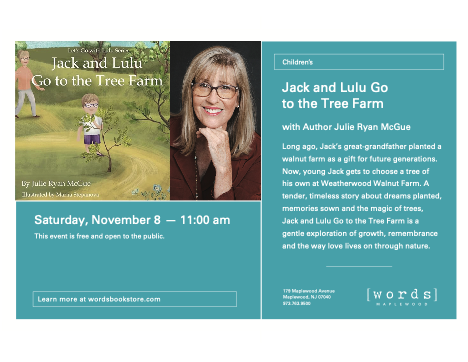
Nov. 8: Julie will read her new children’s book during Story Hour at Words Bookstore in Maplewood, NJ at 11 AM ET.

Nov. 15: Julie will present a workshop at the Michigan City Library on “How to Write Memoir That Reads Like Fiction” from 1-3 PM. Sign up through the Library website.
Nov. 17: Julie will discuss “How to Write Compelling Memoir” to the New Buffalo Township Library from 6-7:30 PM ET.
Follow Julie by visiting her website, subscribe to her bimonthly newsletters, and listen to previous podcast recordings where she discusses topics like adoption, identity, family relationships, sisterhood and belonging.
“That was fifteen years ago now. The biopsy results had come back benign, ductile calcifications, thank God. But the experience left a mark deeper than any scar. It changed how I move through these waiting rooms. How I think about the silence between tests and the results.”
Don’t miss a blog post!
Receive my blog posts directly to your inbox.
I can’t read it right now. Too upsetting.
Hope everything is ok